
%402x%20(5).svg)
Cart
(
)
Executing a professional photoshoot at the Colosseum requires precise logistical planning and geographical strategy. As Rome's most prominent architectural landmark, the immediate perimeter of the Colosseum maintains a high volume of pedestrian traffic throughout the day. To secure unobstructed, high-quality images, photographers must implement a structured route combined with strict time management.
Relying on a static position at the base of the monument often results in cluttered backgrounds and compromised compositions. Instead, an upward-moving trajectory allows for progressive isolation of the subject against the architecture. This guide details a highly specific, four-stage route—commencing at Fontana dei Petali and concluding at Belvedere Cederna—designed to optimize lighting conditions and systematically eliminate crowd interference.
Lighting dictates the technical quality of any outdoor photography session. For the Colosseum, the optimal window for a sunset photoshoot begins exactly 60 minutes prior to the official sunset time.
Initiating the session at this exact timestamp serves multiple technical purposes:
To maximize the architectural scale of the Colosseum while mitigating the presence of tourists, the route must follow a specific elevation plan. By starting at the base and moving upward, the camera angle physically bypasses the crowds gathered at the ground level.
The session initiates at Fontana dei Petali, located near the base level of the Colosseum. This area serves as the introductory framing point.
Because this location is at ground level, crowd density is high. The photographic strategy here relies on tight focal lengths (such as 50mm or 85mm) and selective framing. By positioning the subject near the architectural elements of the fountain or the surrounding low walls, the photographer can utilize these structures to physically block tourists from the lower half of the frame. The Colosseum looms large in the background, establishing the geographical context of the shoot immediately. The light at this stage is still relatively bright, requiring careful exposure management to maintain detail in both the subject's face and the stone facade behind them.
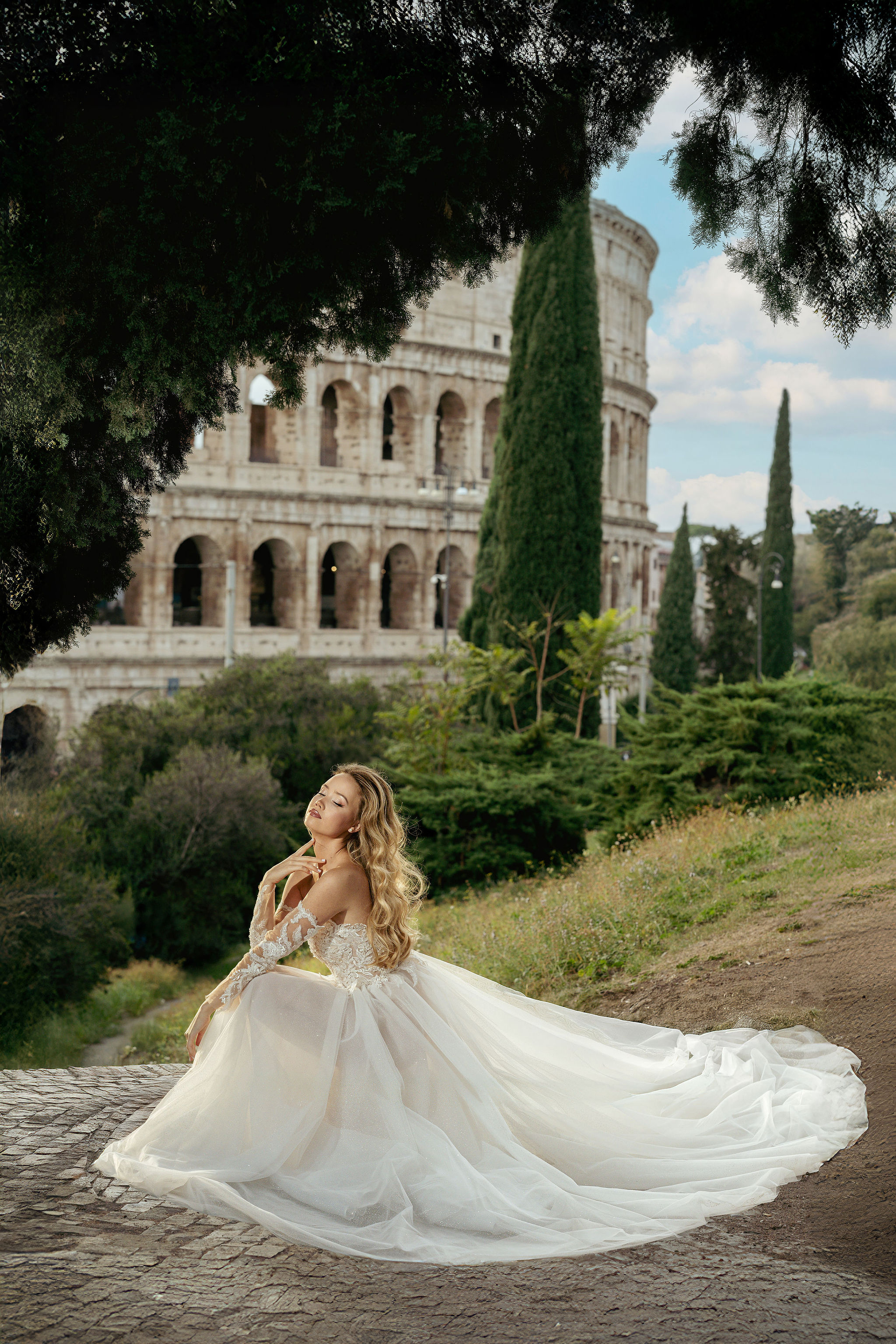
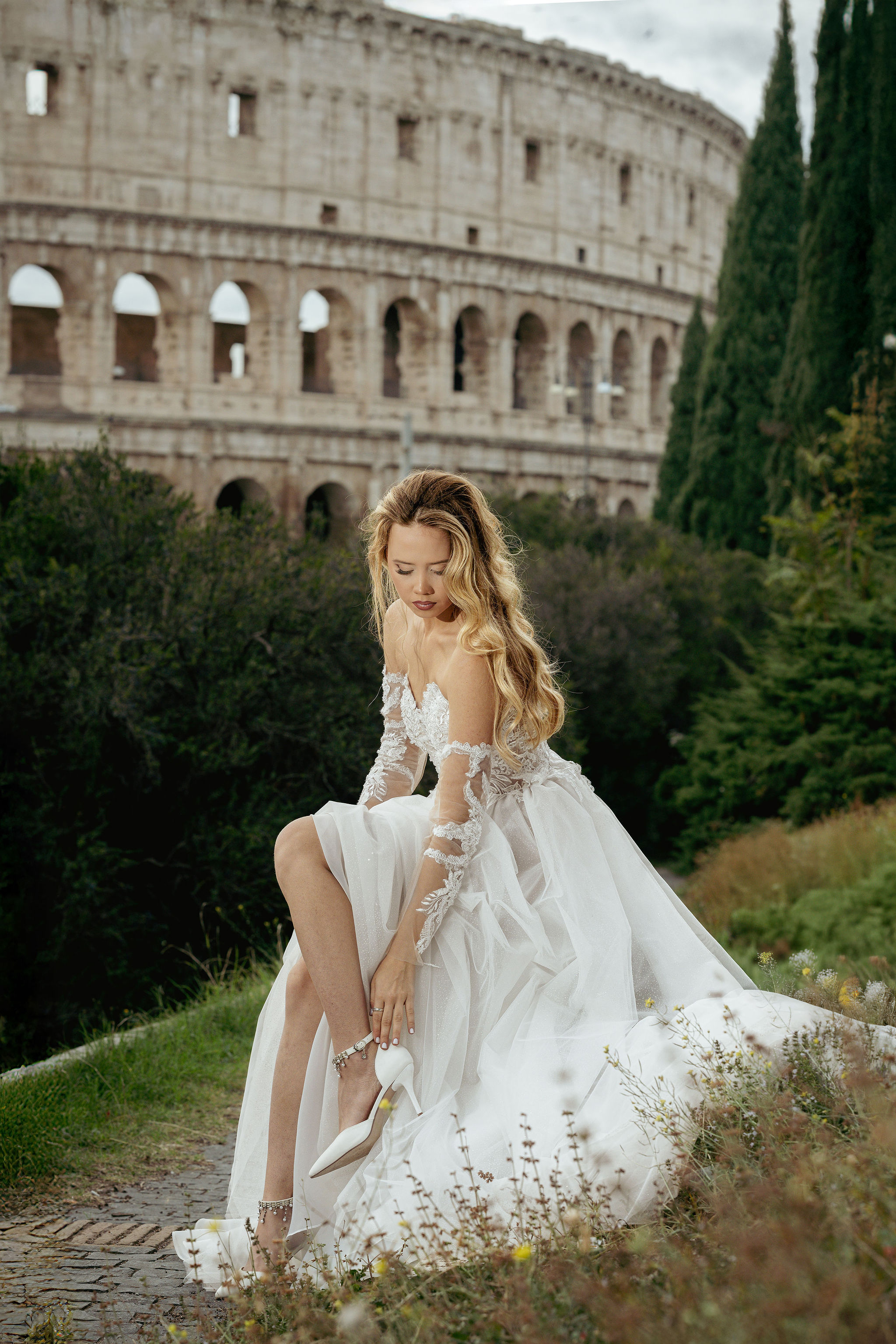
Moving away from the immediate base, the route progresses northeast into the Parco del Colle Oppio e delle Terme di Traiano. This transition marks the beginning of the elevation strategy.
Entering the park provides a critical environmental advantage: natural framing. The presence of mature Mediterranean pine trees and dense foliage offers natural borders for the composition. By shooting through the leaves or positioning the subject between the tree trunks, the photographer creates depth of field. More importantly, the elevation naturally crops out the tour buses, ticket lines, and crowds circulating at the street level. The camera now aligns directly with the middle tiers of the Colosseum, providing a more balanced, level perspective of the arches.
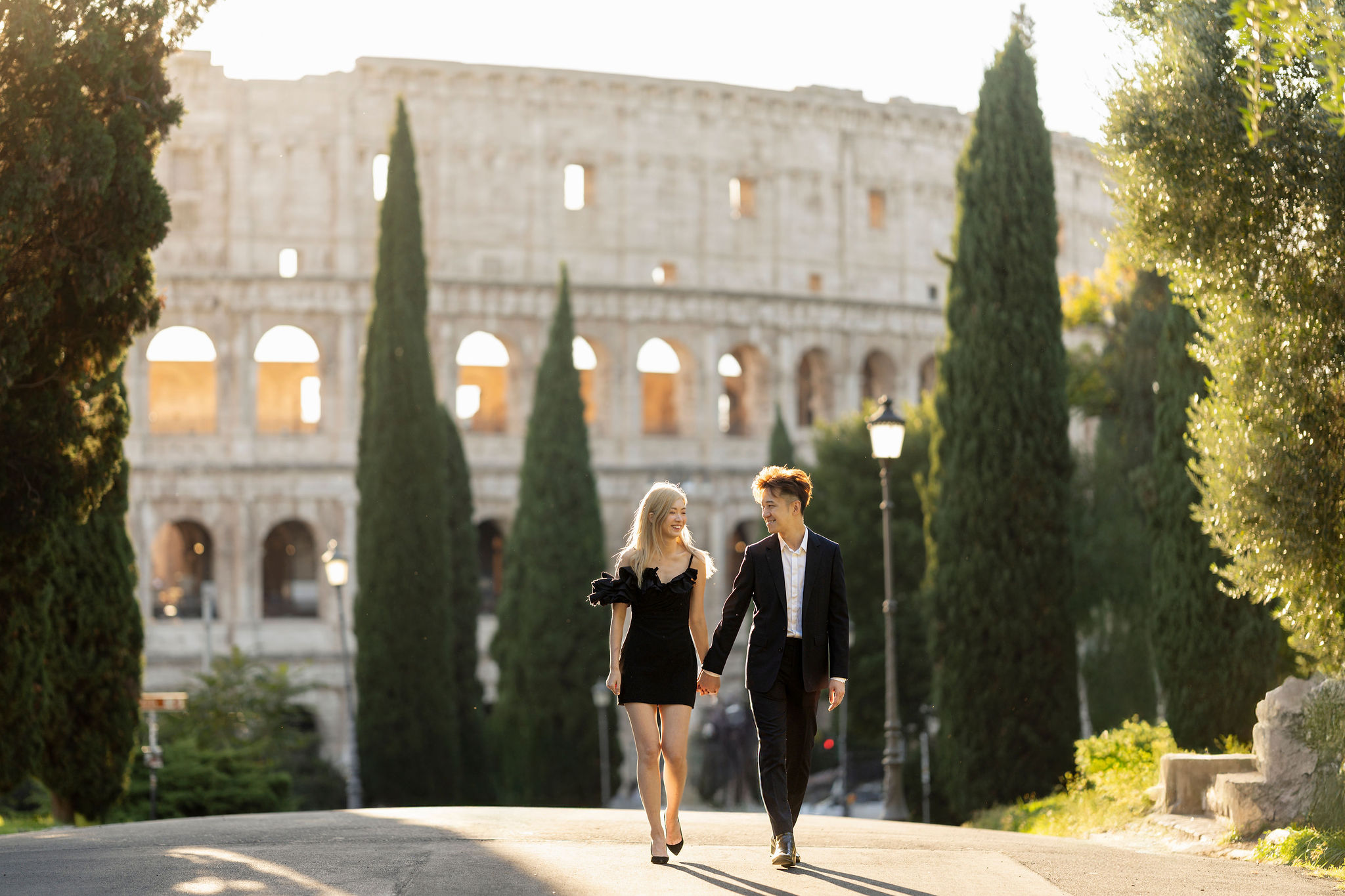
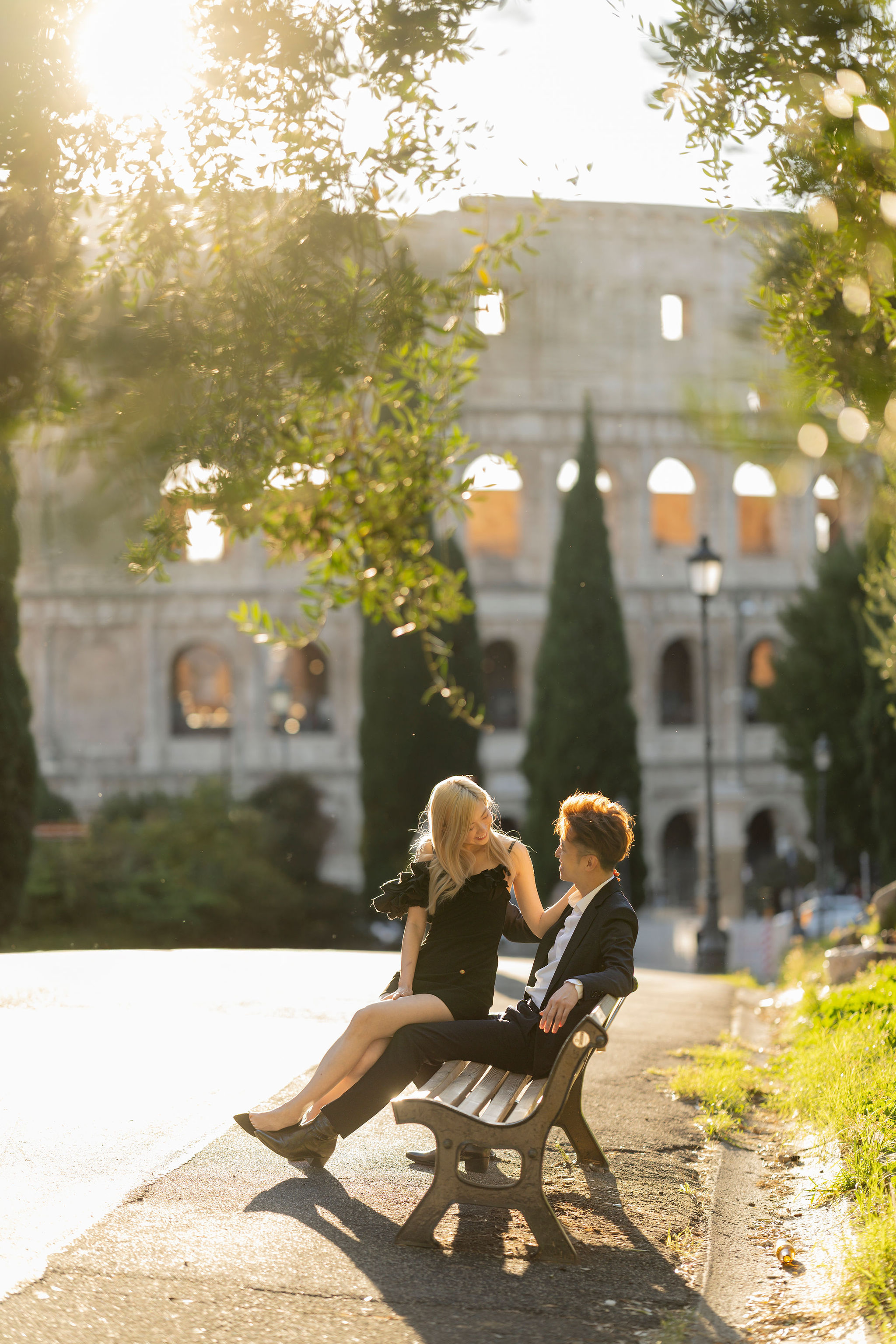
As the 60-minute window reaches its midpoint, the session advances further up the hill to the Giardinetto del Monte Oppio. This designated garden area provides a more structured, paved environment compared to the lower park sections.
At this elevation, the line of sight to the Colosseum becomes highly unobstructed. The light is now entering the peak of the golden hour, casting long shadows and a distinct warm hue. The strategy at this location involves wider compositions. Because the elevation successfully removes ground-level distractions, the photographer can utilize wider lenses (such as 35mm) to capture full-body portraits with the entire curve of the Colosseum visible in the background. The geometric lines of the garden paths can also be utilized as leading lines, directing the viewer's eye straight toward the subject and the monument.
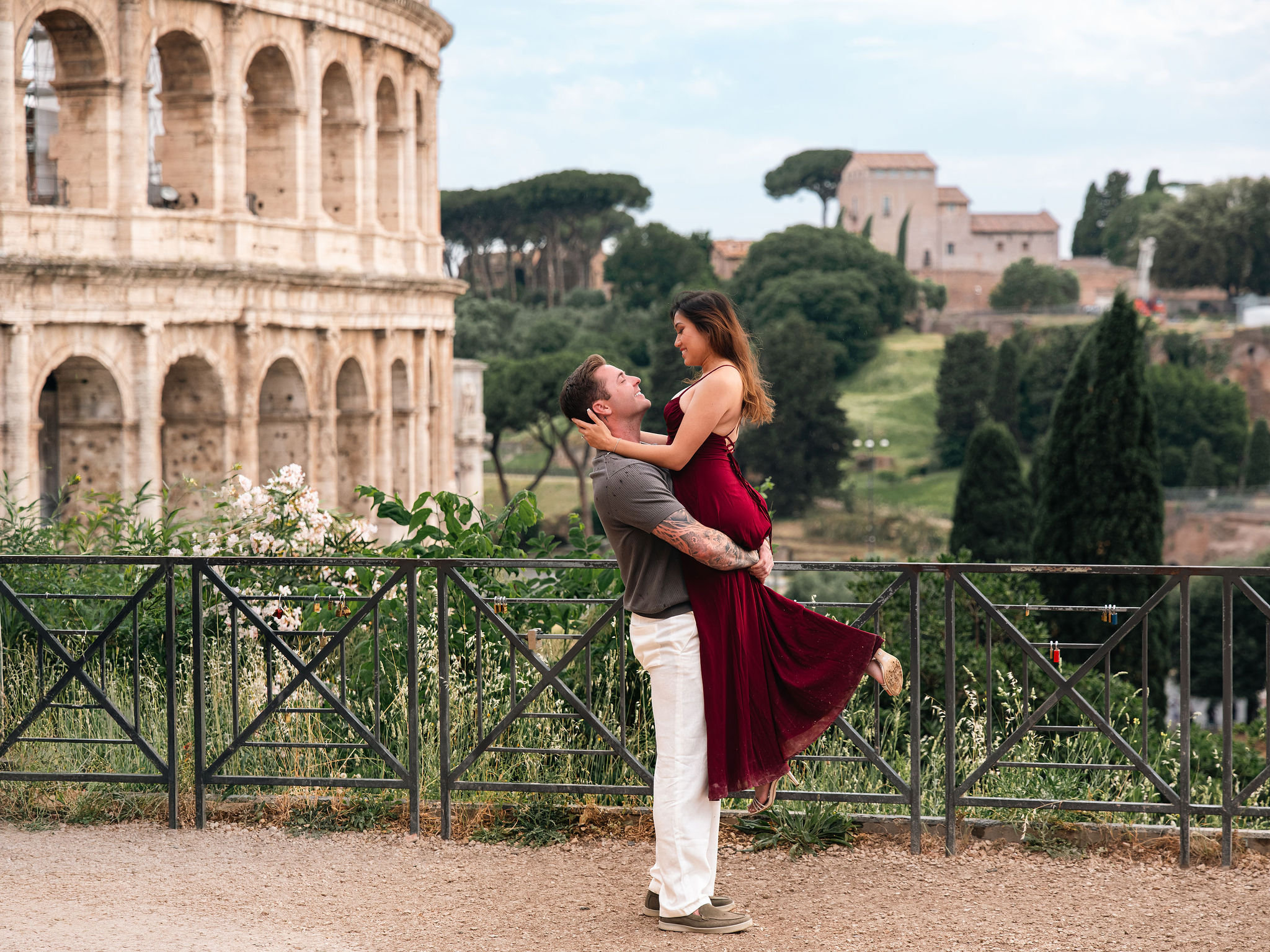
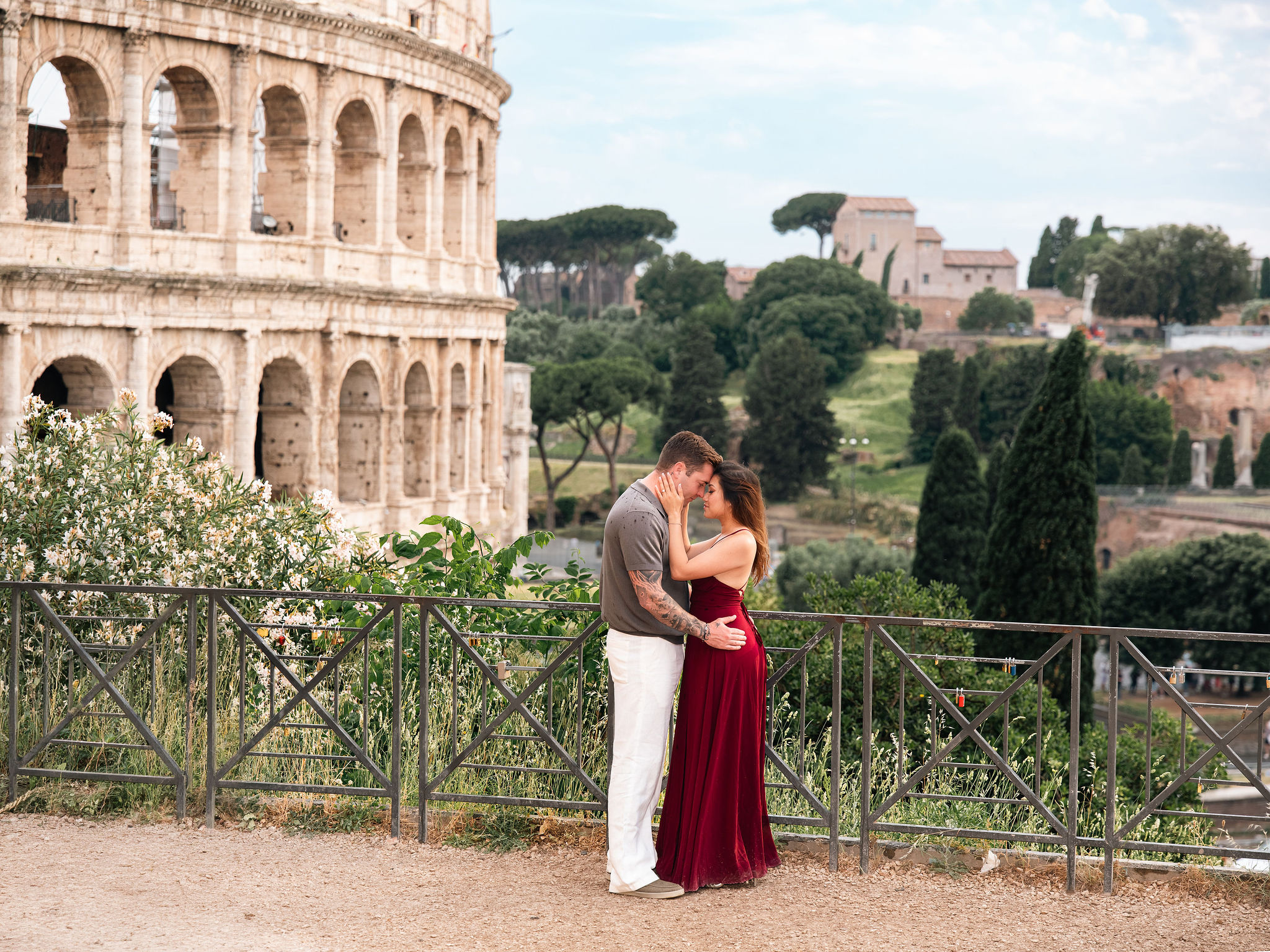
The route culminates at Belvedere Cederna exactly as the sun approaches the horizon line. This terrace offers one of the most commanding, panoramic viewpoints of the Colosseum available to the public.
Positioned high above the monument, Belvedere Cederna provides a structural, wide-angle capacity that cannot be achieved from the ground. At this specific time, the ambient light drops rapidly. The sky transitions into deep gradients, and the artificial lighting of the Colosseum begins to illuminate the inner arches. This requires a precise balancing of exposure, often utilizing a slightly slower shutter speed or a wider aperture to capture the ambient glow. The high vantage point ensures absolute separation from the crowds below, resulting in clean, editorial-grade architectural portraits to conclude the session.
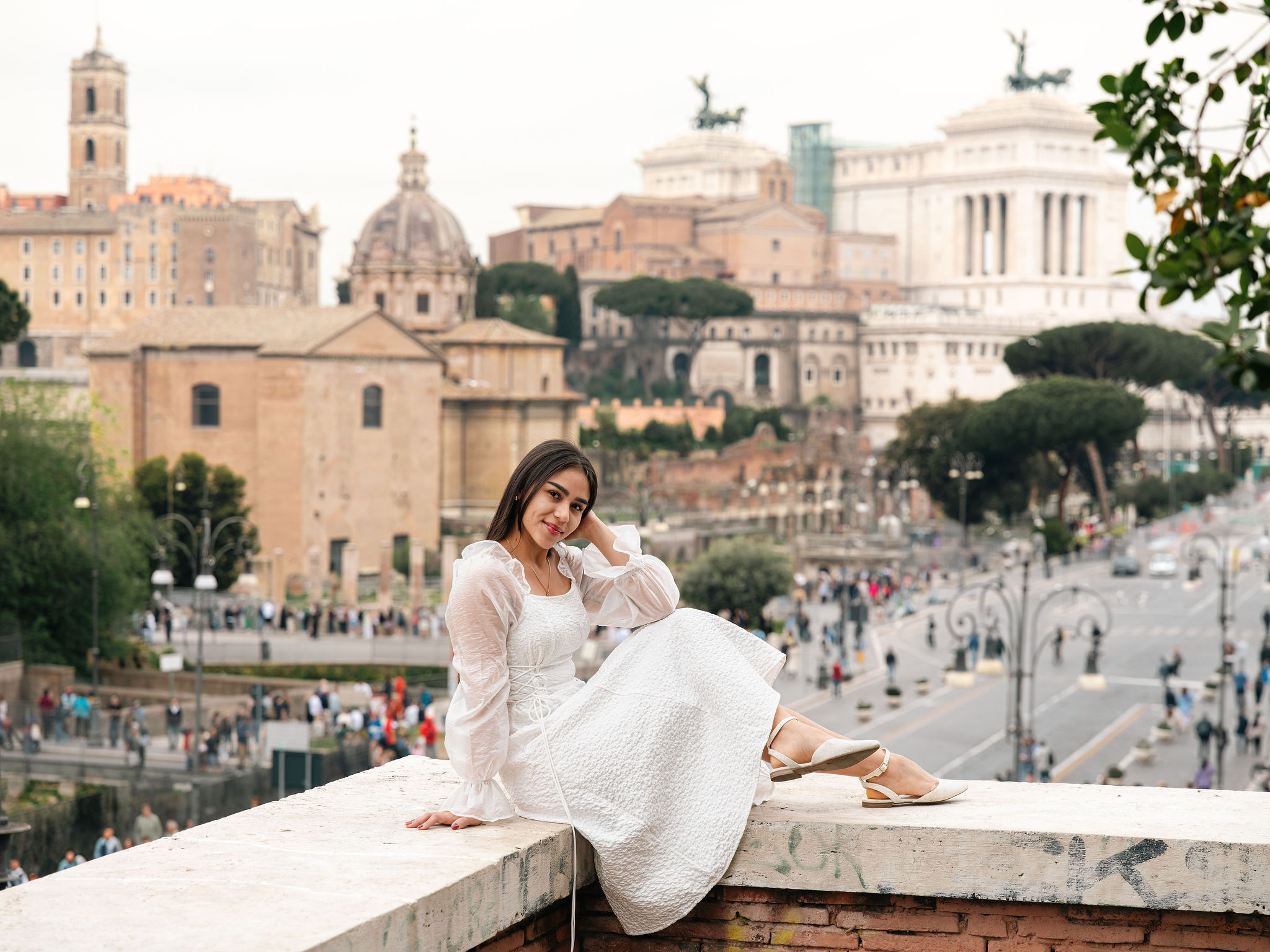
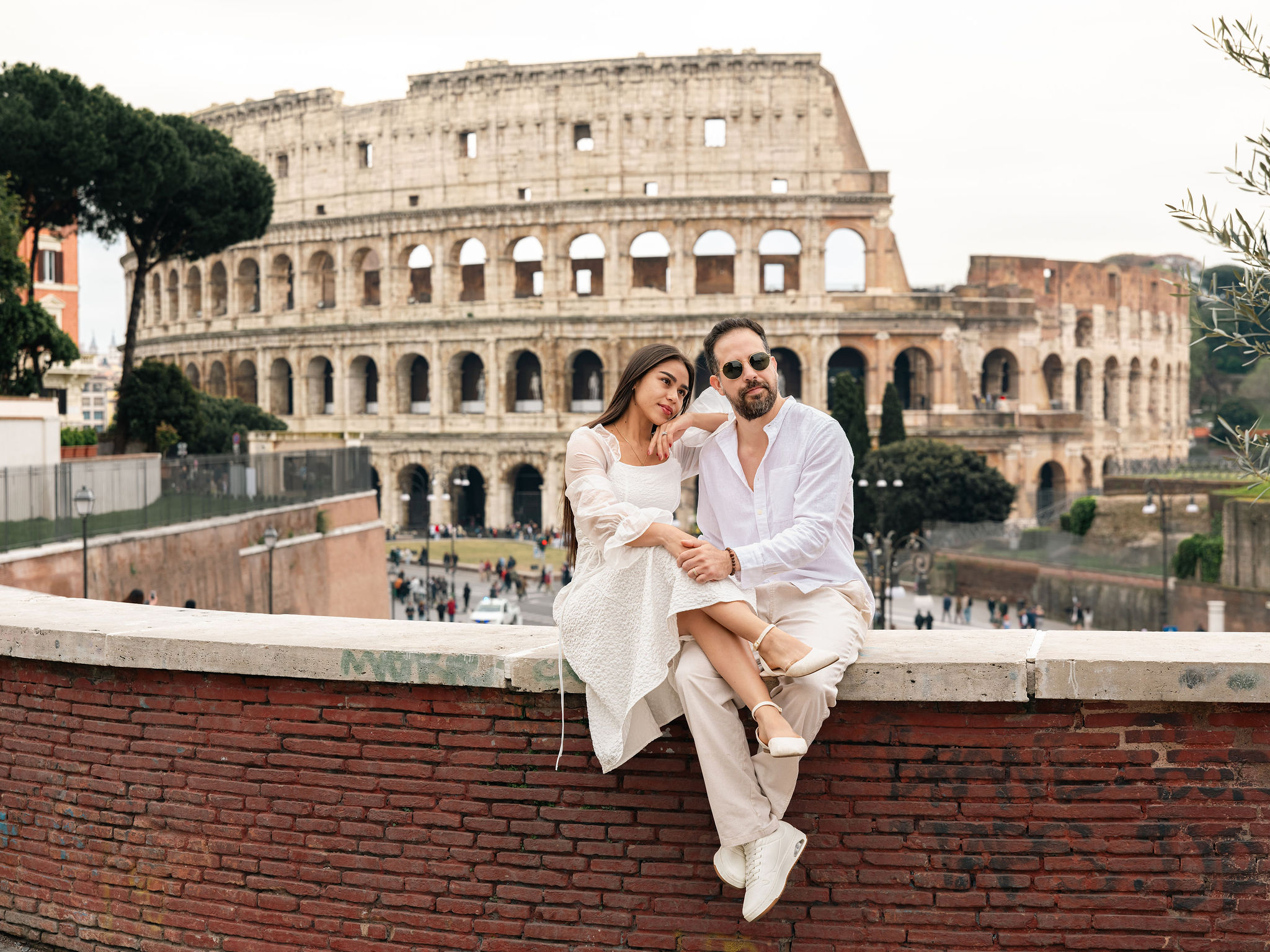
Operating in one of the most visited locations in Europe necessitates a systematic approach to crowd avoidance. Beyond the geographical routing, professional photographers employ several practical tactics:
1. Leverage Elevation and Angles As demonstrated by the route, moving uphill is the most effective method for crowd control. When shooting from an elevated position, the background consists of the upper halves of buildings and the sky, rather than the pedestrian-filled streets. If shooting from the ground level is neبcessary, utilizing a low camera angle pointing upward achieves a similar result.
2. Strategic Subject Placement The subject's body can be used as a physical shield within the frame. By analyzing the background and positioning the subject directly between the camera lens and a group of tourists, the photographer can effectively hide background distractions.
3. Aperture Control for Subject Isolation When operating in the lower areas (Phase 1 and Phase 2), utilizing a wide aperture (such as f/1.4 to f/2.8) decreases the depth of field. This technique forces the background into a soft blur (bokeh). While the Colosseum remains recognizable by its shape and color, the individual tourists walking in the distance are rendered entirely indistinguishable, maintaining the clean aesthetic of the portrait.
Ready to execute this exact route for your Roman holiday? Explore our Colosseum Photoshoot Packages and reserve your sunset session.
Executing a route within the final 60 minutes of sunlight requires constant adjustment of camera settings. The exposure value (EV) will drop continuously as the session progresses from Fontana dei Petali to Belvedere Cederna.
Photographers must prioritize shutter speed to prevent motion blur, particularly if the subject is walking or moving. As the light fades during Phase 3 and Phase 4, increasing the ISO incrementally is necessary to maintain a sharp image. It is highly recommended to shoot in RAW format during this specific timeframe. The high dynamic range of a RAW file allows for the precise recovery of shadow details and the balancing of highlights during post-production, which is critical when photographing a heavily textured monument against a bright sunset sky.
A successful Colosseum sunset photoshoot is not the result of chance; it is the product of precise logistical execution. By adhering to a strict 60-minute pre-sunset timeline and following an upward geographical progression—from Fontana dei Petali through Colle Oppio, up to Giardinetto del Monte Oppio, and finalizing at Belvedere Cederna—photographers can systematically control the lighting environment and eliminate crowd interference. This structured approach ensures the delivery of clean, professionally composed architectural portraits that accurately represent the scale and historical weight of the location.


%402x.svg)
%401x.svg)
%402x%20(5).svg)
