
%402x%20(5).svg)
Cart
(
)
There's a particular kind of anxiety that comes with planning a babymoon photoshoot in Rome. You want the iconic backdrops — the Trevi Fountain, the golden light against ancient stone — but you're also managing swollen feet, unpredictable energy levels, and the very real fear of overdoing it on cobblestone streets that weren't exactly designed with pregnant travelers in mind.
After guiding hundreds of expecting parents through Rome, I've learned that most photography guides simply weren't written with babymoons in mind. They assume you can walk for miles, stand for hours, and squeeze into heels for "the shot." This guide is different. It's built specifically around comfortable routes, realistic timing, and dress ideas that actually work for a Rome babymoon photoshoot — so your session feels like a celebration, not an endurance test.
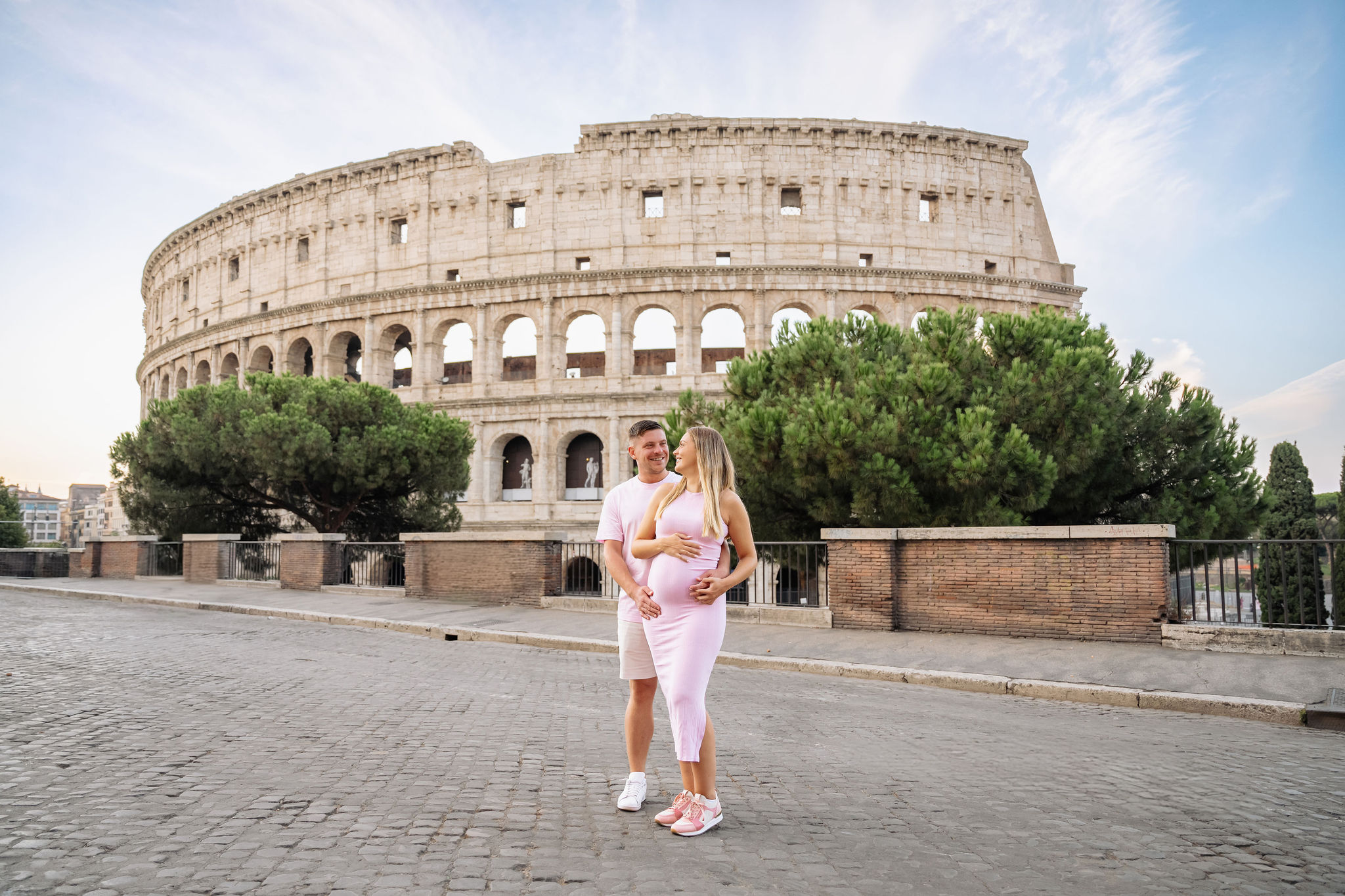
A Rome babymoon photoshoot is a maternity-focused photography session captured against the city's most iconic landmarks, specifically planned around comfort rather than covering maximum ground. It differs fundamentally from a standard couple photoshoot in three ways: shorter walking distances, built-in rest breaks, and pregnancy-safe posing that protects both comfort and dignity throughout the shoot.
Rome offers something few cities can match: centuries of architecture within walking distance of each other, softened by golden Mediterranean light that flatters every skin tone and every stage of pregnancy. Unlike destinations such as Lake Como or Venice — both already well-documented for babymoon photography — Rome combines dramatic historical backdrops with genuine walkability between key locations, provided you know which routes to take.
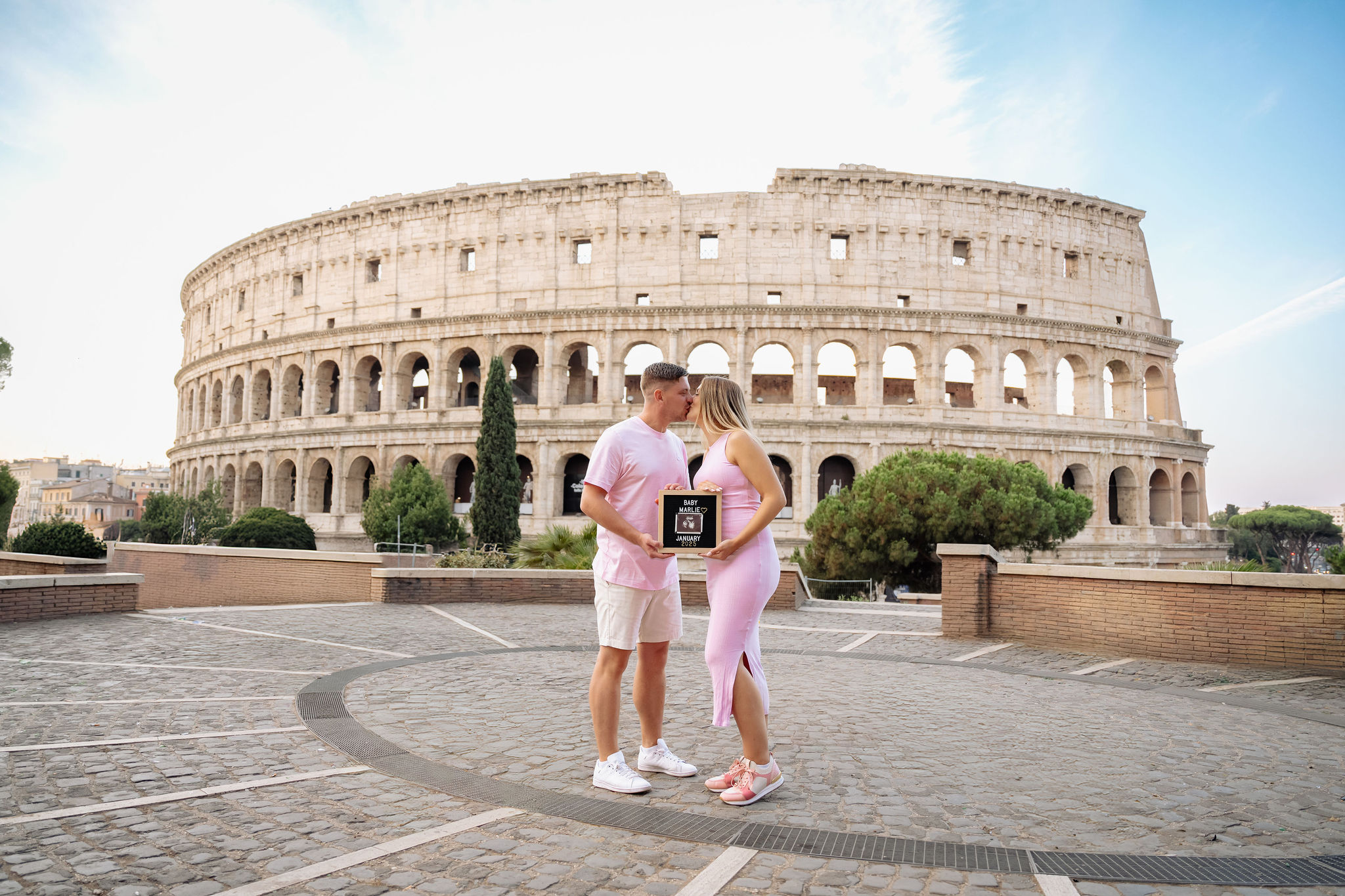
A regular couple photoshoot might cover three to four locations across an hour and a half, with photographers pushing for dynamic movement — walking shots, spins, laughter captured mid-motion. A babymoon session flips this priority. Movement is minimized. Poses are held longer, but more gently. The goal shifts from "covering ground" to "capturing stillness" — and that shift changes everything about how the session should be planned.
The single biggest mistake I see in babymoon planning is choosing locations based on Instagram inspiration rather than actual walking distance. Rome's most photogenic spots aren't always close together, and pregnancy changes what "a short walk" actually means.
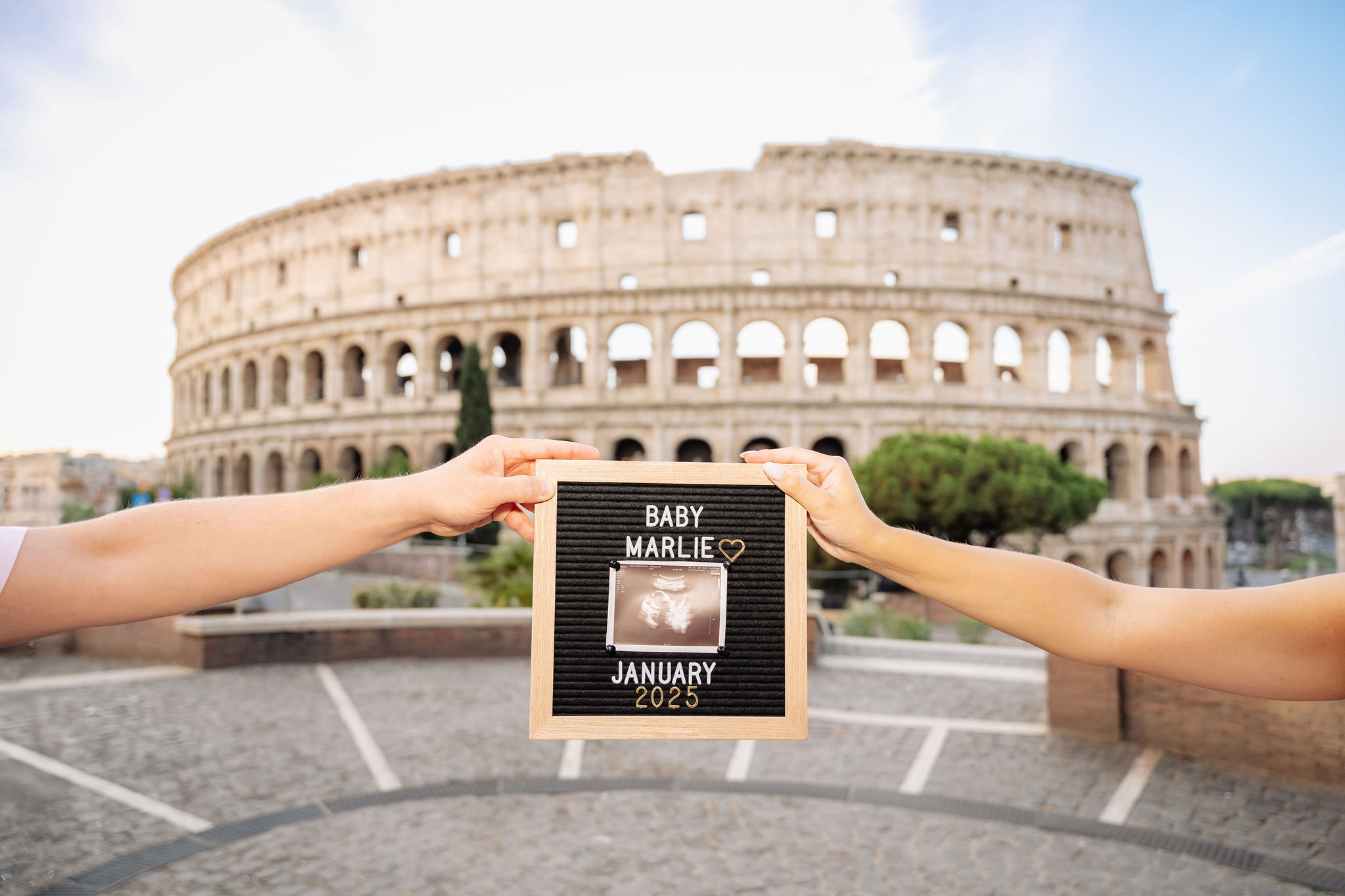
This route covers approximately 10 minutes of flat walking on relatively even pavement — no stairs, no steep inclines. Both locations offer plenty of ledges and benches for seated poses, which matters enormously when you need to rest every 10-15 minutes. The Trevi Fountain's wide plaza also means you're never far from shade or a place to sit.
For clients who want variety without covering distance, Piazza Navona offers three distinct fountains within a single, flat piazza. You can capture completely different backdrops — Bernini's Fountain of the Four Rivers, the Moor Fountain, the Fountain of Neptune — without walking more than a few hundred meters total. This is often my top recommendation for babymoon sessions in the second or third trimester.
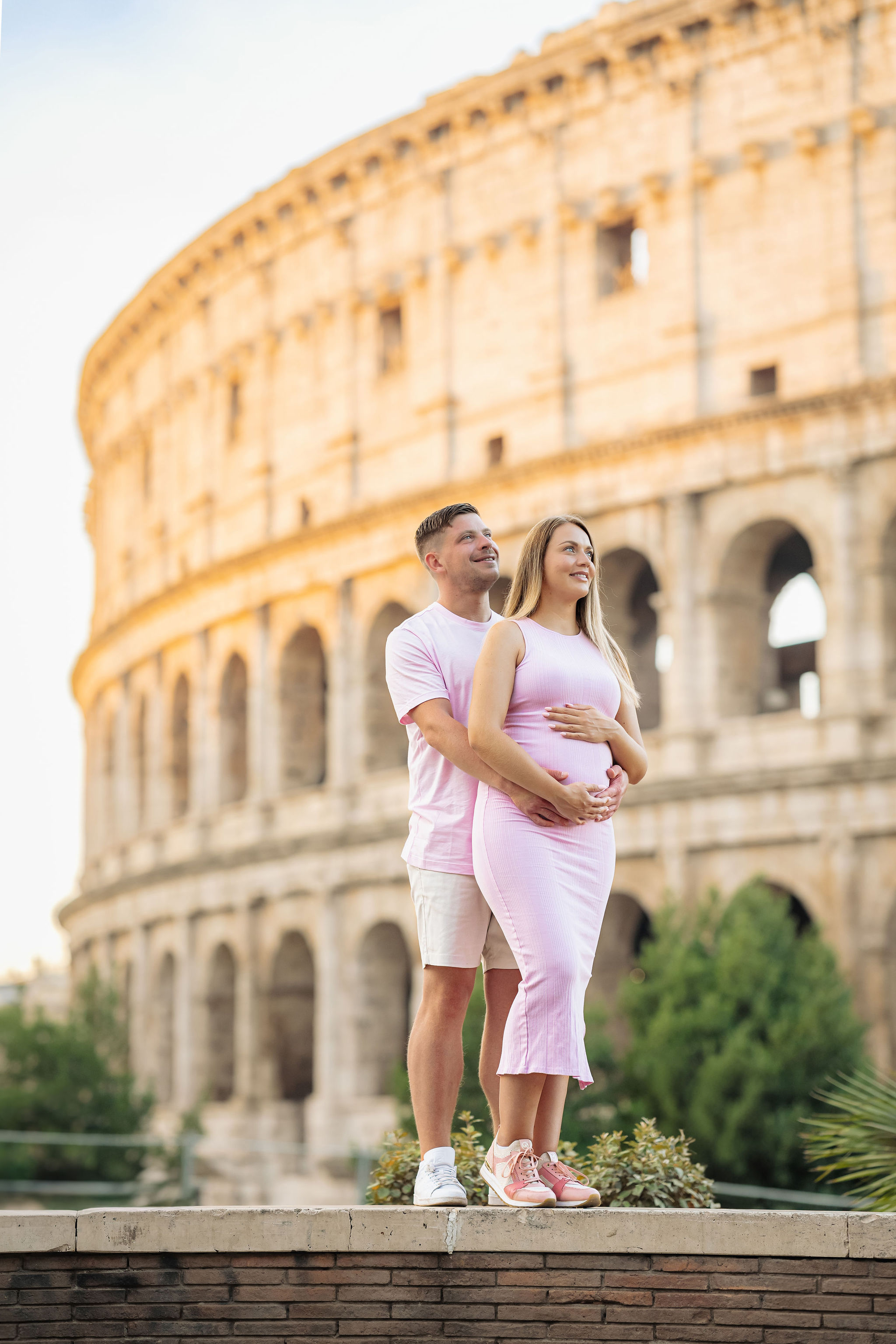
The Colosseum area, while iconic, involves significant walking on uneven ancient stones, limited shaded seating, and no elevator access to elevated viewpoints. Similarly, routes through Trastevere's hillier streets or up toward the Gianicolo viewpoint involve inclines that can be genuinely difficult in later pregnancy. If a landmark requires more than 15 minutes of continuous walking to reach, it's worth reconsidering for a babymoon session specifically.
Choosing Between a 30-Minute or 60-Minute Session
This is the question I get most often, and the answer genuinely depends on your energy levels and how many locations you want to include.
When 30 Minutes Is Enough
A 30-minute session works well if you're focused on a single location — say, just the Trevi Fountain or just Piazza Navona — and you're comfortable with a relatively fast pace between poses. This option suits clients earlier in pregnancy with higher energy levels, or those who simply want a few beautiful, focused images rather than a full documented journey.
In my experience, roughly 70% of babymoon bookings choose the 60-minute package, and for good reason. It allows time for two locations connected by a short, comfortable walk, plus genuine rest breaks that don't eat into your shooting time. It also allows for one outfit change — many expecting parents want both a flowing dress look and a more relaxed, casual option.
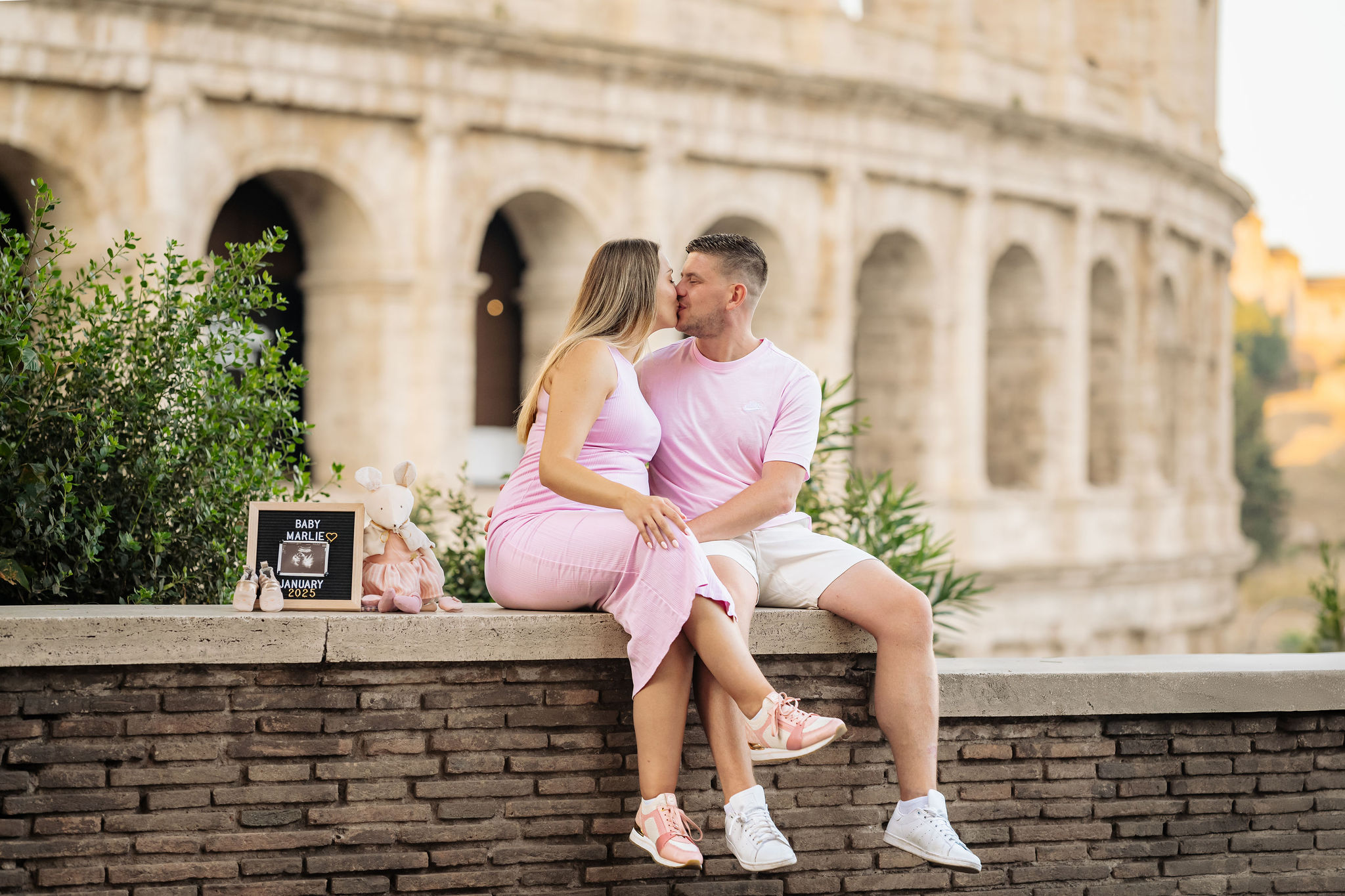
Here's something most photography guides never explain: rest breaks and photography can happen simultaneously. Rather than pausing shooting entirely, I plan seated poses specifically during rest moments — sitting on a fountain ledge, leaning against a column, resting with feet up on a low wall. This means your break time still produces beautiful images, rather than feeling like wasted minutes.
Rome's heat isn't just uncomfortable during pregnancy — it can genuinely affect how you feel for the rest of the day, and even pose risks related to overheating and dehydration.
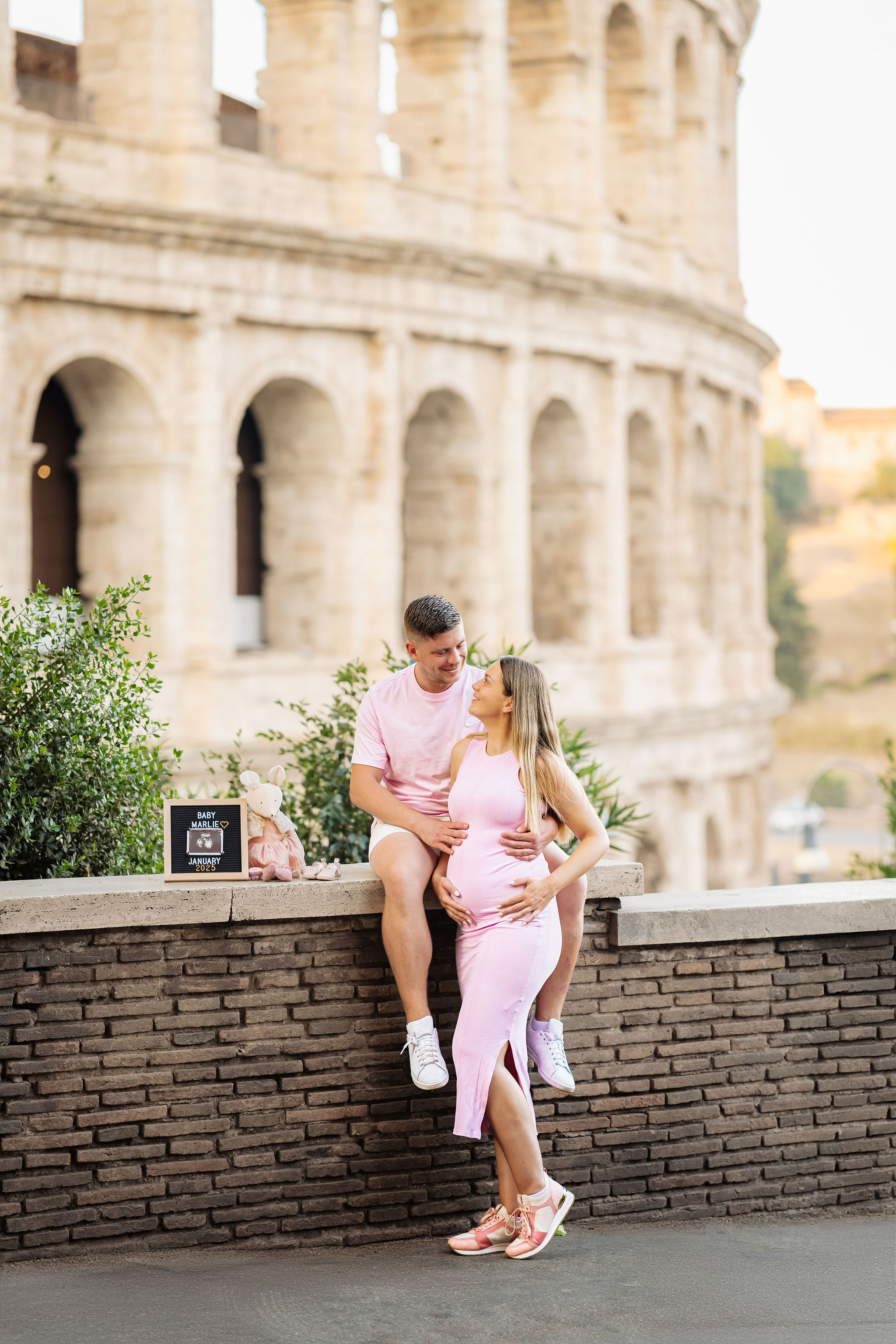
This is, without exception, the window I recommend for every babymoon photoshoot. Temperatures during Rome's summer months can differ by 8-10°C between 7 AM and midday. Beyond the physical comfort, early mornings mean nearly empty landmarks — no navigating around crowds while managing balance and energy, which matters significantly more during pregnancy than in a typical couple shoot.
Between 11 AM and 4 PM during Rome's warmer months (May through September), temperatures regularly exceed 30-35°C with intense, direct sun exposure. Combined with limited shade at many outdoor landmarks, this timing genuinely isn't safe for extended outdoor sessions during pregnancy. If early morning isn't possible due to travel logistics, I strongly recommend shifting to late afternoon instead.
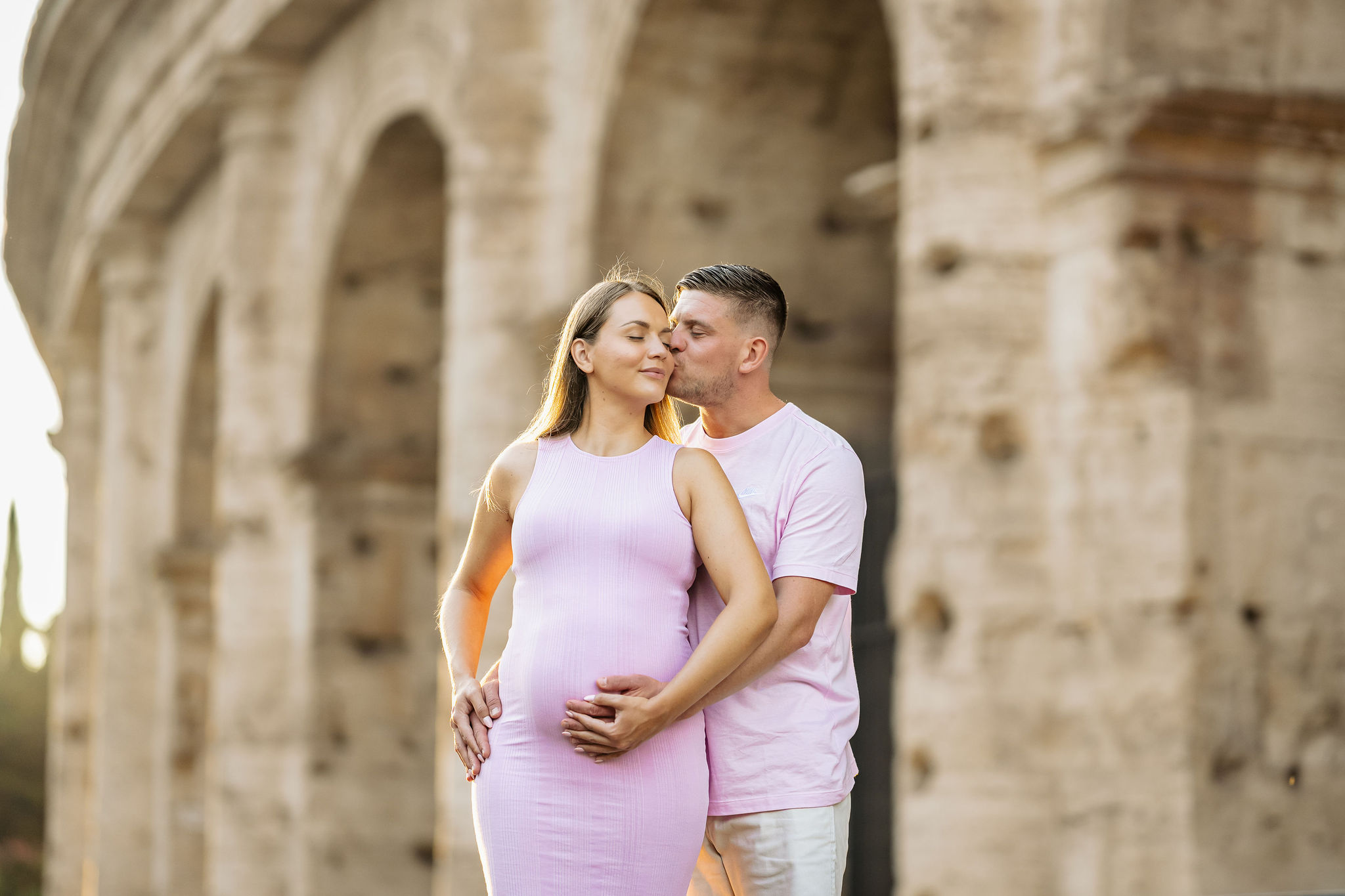
If mornings don't work with your schedule, the hour before sunset offers a second good window — cooler temperatures returning, softer light, and (at certain locations like Piazza Navona) fewer crowds than midday. The trade-off is that some of Rome's most popular spots, like the Trevi Fountain, remain busier at sunset than at dawn.
Wardrobe choices matter more for babymoon photography than almost any other genre of portrait session — both for comfort and for how the images ultimately look.
Lightweight, flowing maxi dresses in soft, breathable fabrics — think cotton, linen blends, or chiffon — photograph beautifully against Rome's warm stone backdrops while allowing genuine freedom of movement. Empire waistlines that sit just below the bust naturally accentuate the bump without any restriction around the midsection, which matters enormously for comfort during a session that may last 45-60 minutes.
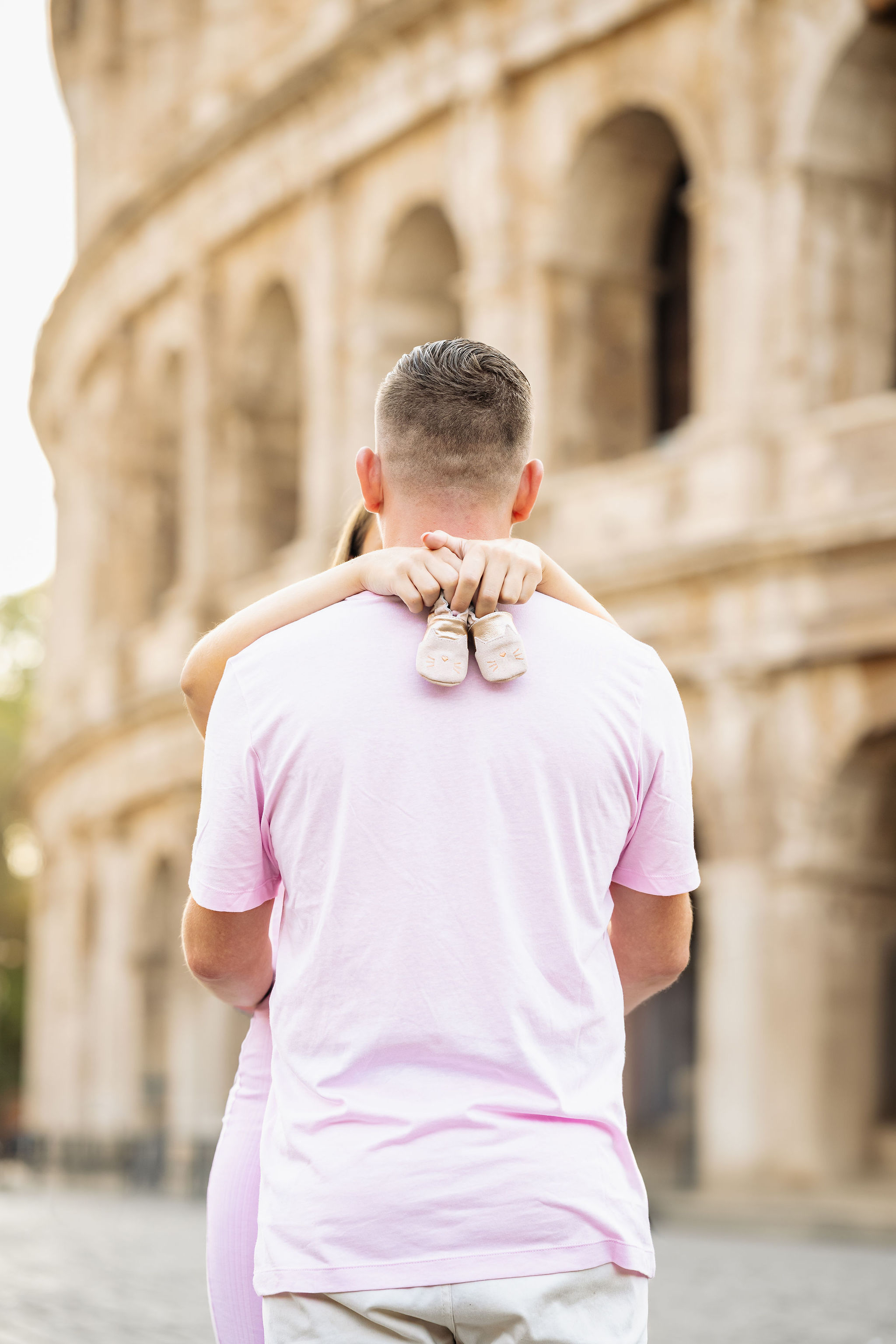
Soft neutrals — cream, sage green, dusty blue, warm terracotta — complement Rome's golden travertine stone beautifully without competing with the architecture. For early morning sessions, lighter pastel tones photograph particularly well against the cooler, softer morning light. Avoid heavy, structured fabrics; they trap heat and restrict movement precisely when you need neither.
This is where I see the most regret afterward. Rome's cobblestones are genuinely difficult terrain, and pregnancy-related swelling makes rigid or narrow shoes actively painful within 20 minutes. Cushioned sandals with an adjustable strap, or soft ballet flats with some give, are the practical choice. I always recommend bringing a second, even more comfortable pair to change into immediately after the session ends.
The internet is full of the same handful of maternity poses — hands forming a heart shape over the belly, standing in silhouette, the classic "looking down at the bump" shot. These aren't bad, but they can feel staged rather than authentic when overused.
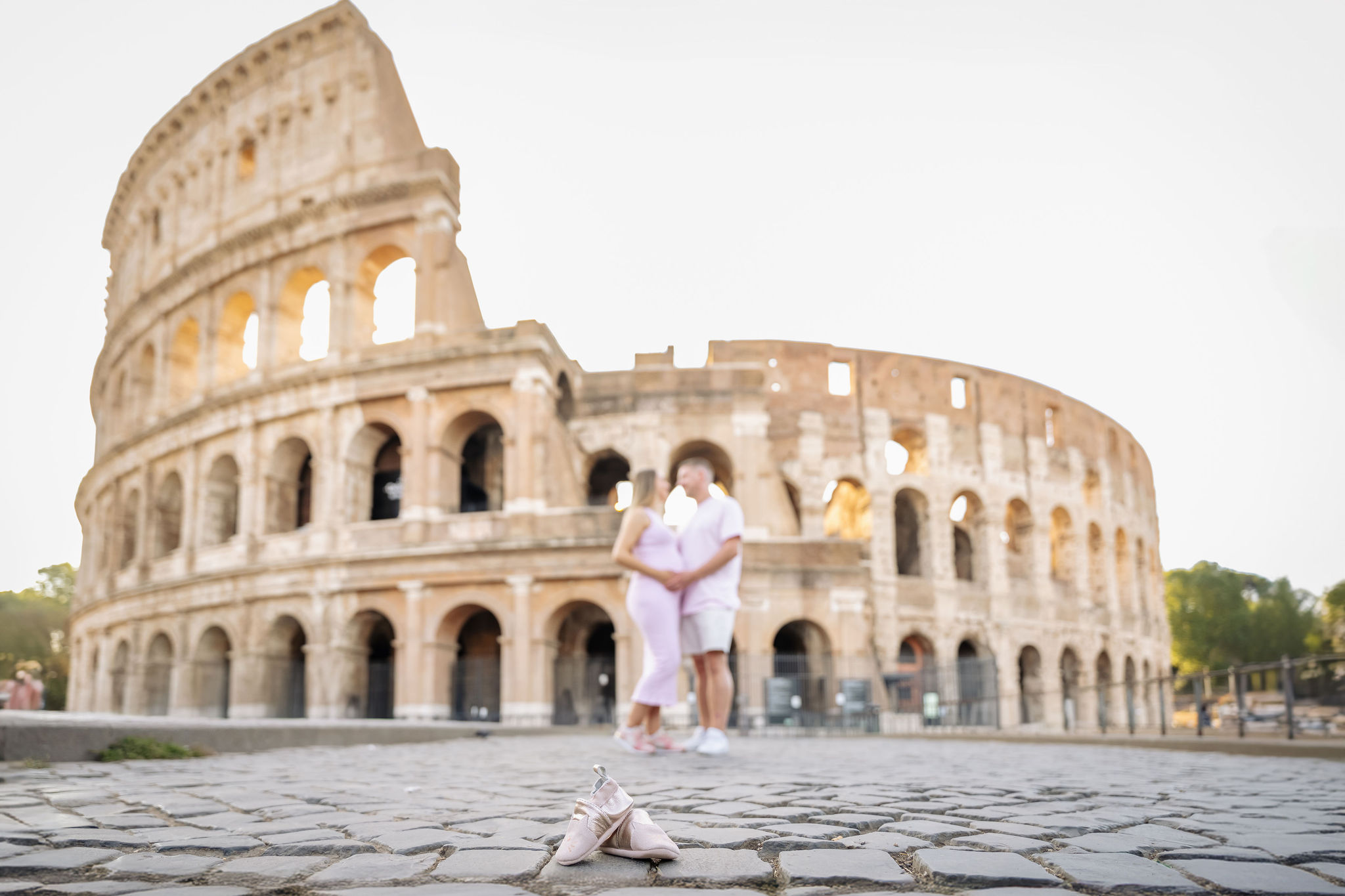
Instead of hands forming shapes, I often direct clients to simply rest one hand naturally on the belly while looking toward the landmark itself — the Trevi Fountain, the piazza, the architecture — rather than at the camera. This creates a more candid, storytelling feel. Sitting poses, with the bump gently visible through fabric as you rest on a fountain ledge, also read as far more natural than standing "presentation" poses.
Some of the most requested images from babymoon sessions aren't solo bump shots at all — they're partner moments. A forehead resting gently against the bump, both sets of hands overlapping, or simply an embrace from behind with a genuine laugh. These moments require far less direction because they happen naturally once clients feel comfortable, which is why I spend the first several minutes simply talking before any serious shooting begins.
Poses requiring precise, held positions — balancing on one prop, extreme angles, anything requiring the photographer to say "hold very still" for more than a few seconds — tend to produce tension in both the pose and the pregnant body. I generally avoid anything that requires more effort than simply standing or sitting comfortably.
Yes — and in fact, most babymoon sessions include both solo maternity portraits and couple images throughout. The question isn't whether your partner can join, but how the time gets balanced between solo and couple moments.
I typically recommend splitting session time roughly evenly: solo portraits that focus entirely on the bump and the expecting parent's connection to the moment, alongside couple images that capture the shared experience of the pregnancy. Both types of images tend to become equally meaningful once the session is complete — couples are often surprised by how much they value the partner-inclusive shots.
Rather than shooting all solo images first and all couple images second, I interweave them throughout the session at each location. This keeps energy levels more consistent and avoids the fatigue that comes from lengthy standalone solo posing sessions, particularly later in pregnancy.
Getting between locations comfortably matters just as much as the locations themselves for a babymoon session.
I build in genuine rest breaks approximately every 10-15 minutes, particularly for sessions covering two locations. These aren't rushed — they're planned as part of the shoot itself, often coinciding with seated poses that produce some of the most relaxed, authentic images of the entire session.
For any two locations more than 10 minutes apart on foot, I recommend a short taxi ride rather than walking — even if the walk seems manageable on paper. Pregnancy affects stamina unpredictably from day to day, and preserving energy for the actual photography matters more than saving a taxi fare.
Every babymoon client should bring: a bottle of water (minimum 500ml), a light scarf or fan for shade and cooling, comfortable back-up shoes, and snacks if the session extends beyond 45 minutes. Small comforts like these prevent the fatigue that can otherwise cut a beautiful session short.
Planning a babymoon photoshoot in Rome doesn't need to involve guesswork about routes, timing, or what to wear. With the right planning — flat, comfortable routes, early morning timing, breathable wardrobe choices, and natural, unhurried posing — your session becomes a genuinely enjoyable part of your Rome trip rather than a source of stress.
→ Book Your Rome Babymoon Photoshoot Today
Reserve your early morning session and experience Rome's most iconic landmarks at the pace that's right for you.
A Rome babymoon photoshoot succeeds when comfort and beauty aren't treated as competing priorities. The routes you choose, the timing you book, and the outfits you wear all work together to create a session that feels as good as it looks in the final images. Drawing on hundreds of maternity sessions across Rome's landmarks, this guide reflects what genuinely works for expecting parents — not generic photography advice repurposed for a different kind of shoot. Whether you choose the Trevi Fountain, Piazza Navona, or a combination of both, the goal remains the same: capturing this moment in a way that respects exactly what your body and energy levels need right now.


%402x.svg)
%401x.svg)
%402x%20(5).svg)
