
%402x.svg)
Wedding Photography in Rome: Church, Civil Ceremony & Vow Renewal Guide
I’ve been photographing couples in Rome for years, and there’s a moment I never get tired of: the second someone steps out of the noise of a Roman street and into the hush of a church. The temperature drops. The light softens. And whatever brought them here — a wedding, a civil ceremony, a promise they made decades ago — suddenly feels very real.
Rome has more than 900 churches. That’s not a fun fact for me; it’s my working environment. People travel here from every corner of the world to say “I do” — or to say it again — because this city treats ceremony as something sacred. Many of my clients arrive with a dress bought just for this day, sometimes after fifty years of marriage. They don’t see it as a photo session. They see it as a rite. My job is to photograph it that way.
This guide covers the three kinds of ceremonies I photograph most often in Rome: church weddings and blessings, civil ceremonies, and vow renewals. I’ll walk you through where they happen, what the rules actually are, and what I’ve learned behind the camera at each one.
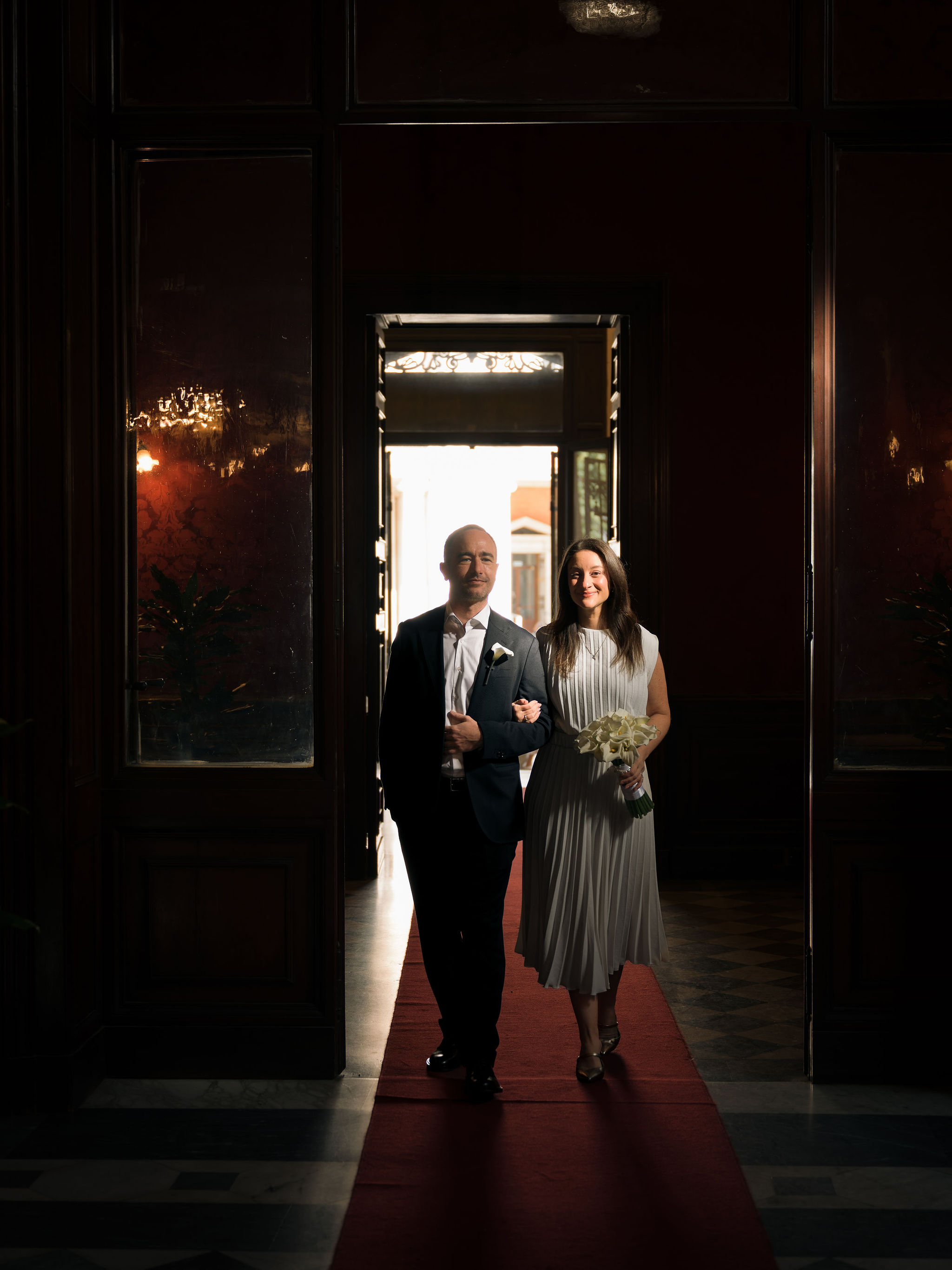
Three Ways to Say “I Do” in Rome: Which One Is Yours?
Before we go deeper, here’s how the three options compare from a photographer’s point of view:
Church Ceremony
- Legally binding: Yes, if arranged as a Catholic wedding; blessings are symbolic
- Typical venue: One of Rome’s historic churches
- Photography freedom: Moderate — each church sets its own rules
- Ceremony length: 30–60 minutes
- Best for: Couples wanting a full religious wedding or blessing

Civil Ceremony
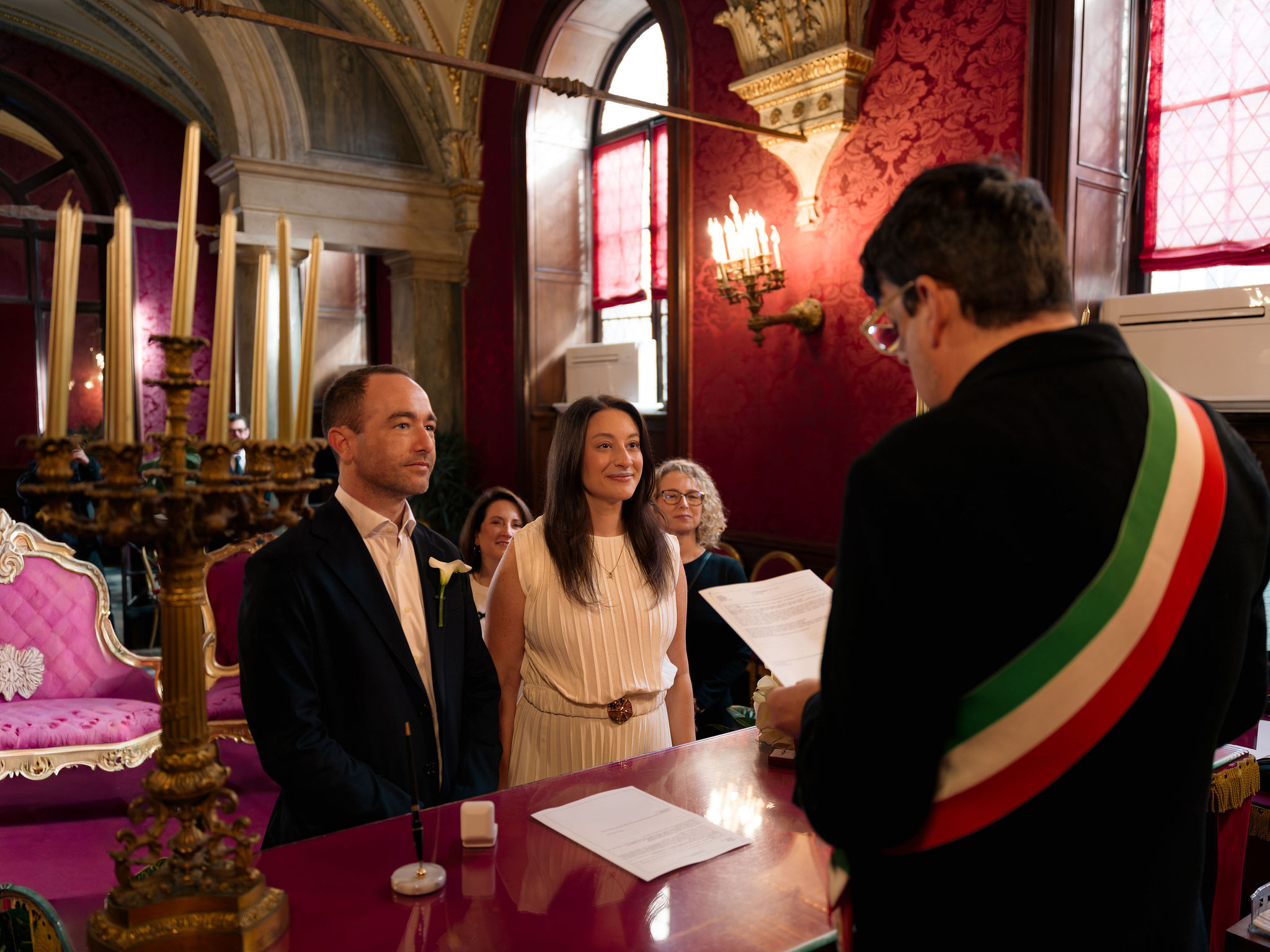
- Legally binding: Yes — an official Italian civil marriage
- Typical venue: Campidoglio (Sala Rossa) or another municipal hall
- Photography freedom: Limited during the ceremony, with full freedom afterward
- Ceremony length: 15–20 minutes
- Best for: Couples who want an official marriage followed by iconic Rome portraits
Vow Renewal
- Legally binding: No — it is purely symbolic, which means almost no bureaucracy
- Typical venue: A church, garden, terrace, or anywhere meaningful
- Photography freedom: High — the ceremony can be planned around you
- Ceremony length: 20–40 minutes
- Best for: Couples celebrating an anniversary or renewing a promise

Church Weddings & Ceremonies in Rome
Rome's historic churches offer something no other venue can — centuries-old architecture, golden mosaics, and natural light that seems made for photography. As a photographer who has worked in many of them, here's what you need to know about ceremonies, blessings, and the rules inside.
What Makes Roman Churches Special for Photography
I’ve photographed in churches across Italy, and Roman churches have something I rarely find elsewhere: they were built to handle light. Tall windows placed high in the nave, marble that bounces soft illumination back onto faces, golden mosaics in the apse that glow even on overcast days. When a couple stands at the altar, I often don’t need to add any light at all — the architecture has been doing my job for a few centuries.
There’s also scale. A wide shot down the central aisle, with the couple small beneath a painted dome, tells a story no villa or hotel ballroom can: two people making a promise inside something much older and larger than themselves.
Churches That Welcome Ceremonies and Photography
Not every church in Rome hosts ceremonies for visitors, and the famous basilicas (St. Peter’s, the Pantheon) have heavy restrictions. But Rome has a number of churches that regularly welcome international couples — especially the English-speaking parishes.
One I return to often is St. Patrick’s Church in Rome, near Via Veneto. It’s an English-speaking Catholic community, the interior is stunning — a golden apse mosaic, warm marble, wooden coffered ceiling — and the clergy are genuinely welcoming to couples who come for blessings and vow renewals. I photographed a beautiful church vow renewal in Rome there recently, which I’ll come back to later in this guide.
A few practical notes from my experience arranging shoots at churches like this:
• Contact the parish early. Popular churches book ceremonies weeks or months ahead, and each has its own procedure.
• Ask specifically about photography. Some churches allow a photographer to move freely; others assign you a position. Knowing this in advance changes how I plan the coverage.
• Catholic weddings require paperwork. If you want a legally recognized Catholic marriage (not just a blessing), your home parish and the Roman church will need documents processed well in advance. Blessings and renewals skip almost all of this.

Photography Rules Inside Churches — What I Actually Do
Every church I work in gets the same treatment from me: I arrive early, before the couple, and spend time studying the light and choosing my positions. Where does the sun fall at this hour? Where can I stand during the vows without stepping into the sightline of the priest? Which angle keeps the altar behind the couple instead of a side door?
During the ceremony itself, my rules are simple and non-negotiable:
• No flash during prayers or the exchange of vows. The available light in Roman churches is almost always enough, and a flash firing during a blessing breaks something that can’t be un-broken.
• I move during transitions, not during sacred moments. When the priest speaks, I’m still. When pages turn or the couple shifts position, that’s when I change my angle.
• The ceremony leads; I follow. I never ask a priest to pause or a couple to repeat something for the camera. The real moment, photographed honestly, is always stronger than a staged one.
What to Wear for a Church Ceremony
Here’s something I’ve noticed again and again: couples who choose a church ceremony in Rome treat the day with a kind of reverence, and it shows in what they wear. Many of my clients buy an outfit specifically for this occasion — a white dress for a vow renewal, a suit that hasn’t been worn since the original wedding, a corsage pinned with shaking hands. That intention photographs beautifully.
Two practical things to keep in mind. First, Roman churches enforce a dress code: shoulders and knees covered for everyone entering, including guests. A light shawl solves this instantly for summer ceremonies. Second, think about how your outfit works in two settings — the dim warmth of a church interior and the bright outdoor light of the portraits afterward. Soft whites, blues, and muted tones handle both; heavy sequins and pure black are harder to photograph well in dark interiors.
Civil Ceremonies in Rome
Civil ceremonies at the Campidoglio are quick—usually fifteen to twenty minutes—but they're also legally binding and gorgeously intimate. What makes them special for photography is what comes after: a couple stepping out into one of Rome's most photogenic hills with a few hours of freedom and light ahead.
The Campidoglio: Rome’s Iconic Civil Wedding Venue
Most civil ceremonies for international couples happen at the Campidoglio — the city hall complex designed by Michelangelo on Capitoline Hill. The ceremonies take place in the Sala Rossa (the Red Hall), a velvet-walled room that has seen thousands of marriages.
From a photographer’s perspective, here’s what you should know: the ceremony is short — usually fifteen to twenty minutes — and the hall is intimate, so I work quietly from two or three positions rather than circling the room. The red walls create a rich, warm backdrop that flatters every skin tone, and the moment the officiant declares you married, there’s a burst of genuine emotion in a very compressed space. It’s one of my favorite things to photograph precisely because nothing about it is drawn out.
One logistical note: civil ceremonies at the Campidoglio are scheduled tightly, often with another couple waiting. Don’t plan your group photos inside the hall. Plan them for what comes next — because what comes next is the best part.
The Best Photo Route After a Civil Ceremony
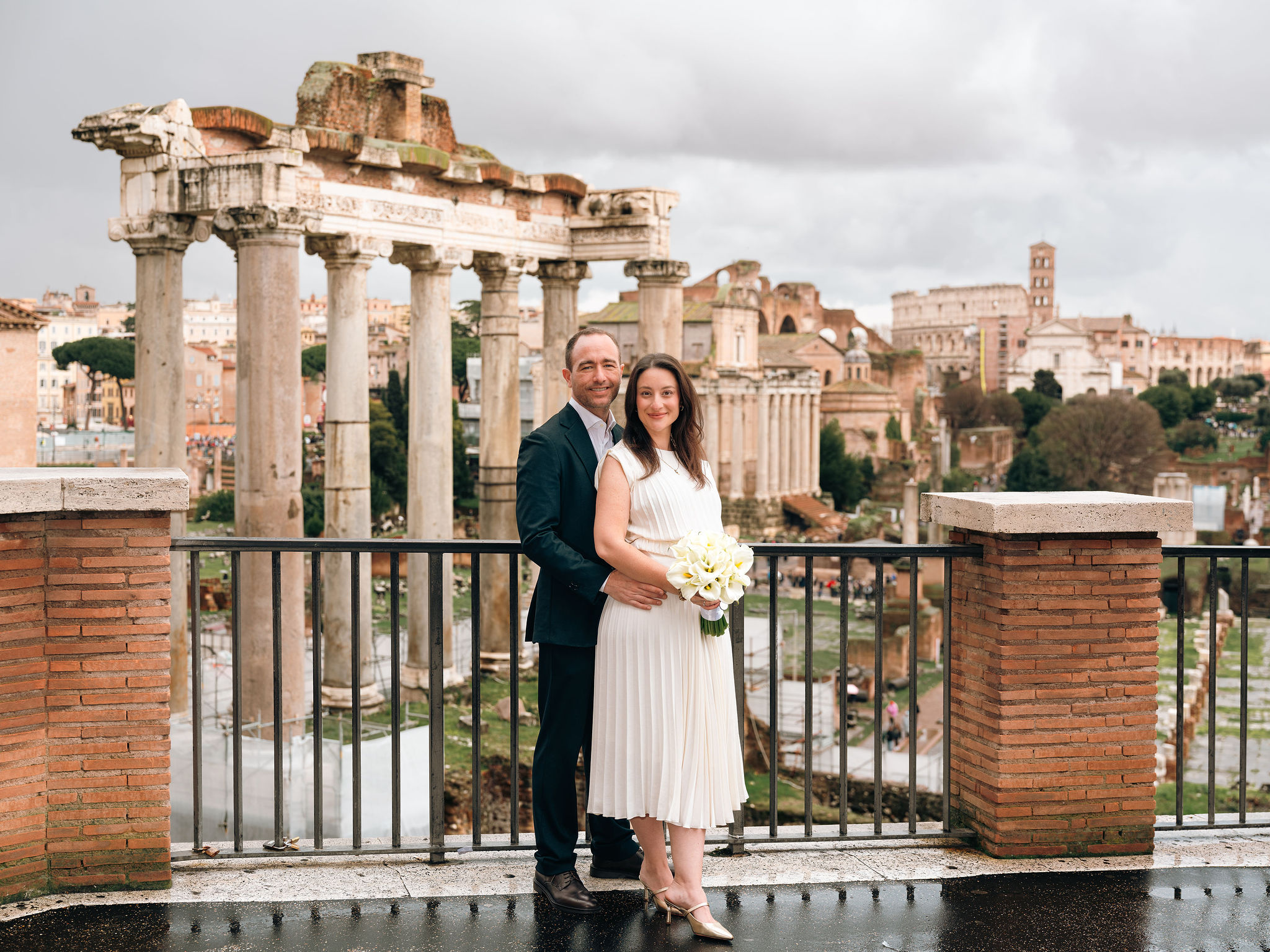
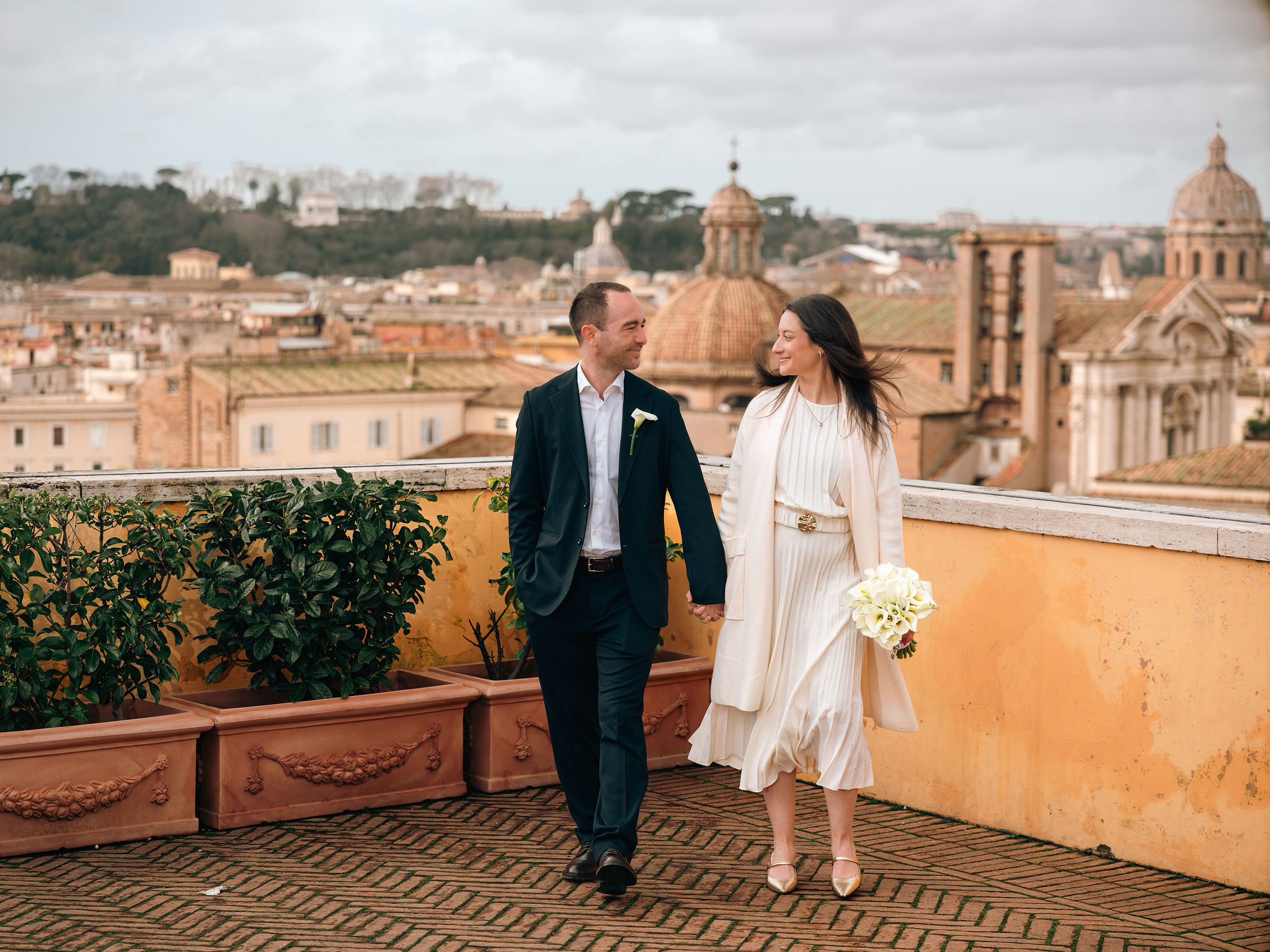
The Campidoglio sits on one of the most photogenic hills in the world, and this is where a civil ceremony beats almost any other option for portraits. You step out of the Sala Rossa and within a two-minute walk you have:
1. Michelangelo’s Piazza del Campidoglio — the geometric pavement, the statue of Marcus Aurelius, the symmetry.
2. The terrace overlooking the Roman Forum — my single favorite “just married” backdrop in the city, especially in late afternoon light.
3. The walk down toward the Colosseum along Via dei Fori Imperiali — an entire route of portraits with two thousand years of history behind you.
I’ve written a full guide to photographing this exact route — the Colosseum, Fori Imperiali and Capitoline Hill — with timing and crowd tips, if you want to plan it in detail.
Vow Renewals in Rome: Different From a Wedding — and That’s the Point
Of the three kinds of ceremonies in this guide, vow renewals have quietly become the one I care about most. Here’s why.
A wedding carries nerves. The couple is performing, in the best sense of the word — in front of family, in front of tradition, in front of a future they haven’t lived yet. A vow renewal has none of that tension. The couple isn’t promising something new; they’re confirming something they’ve already proven. When I photograph a renewal, I’m not capturing hope. I’m capturing evidence.
Last summer, on one of the hottest days of the season, I photographed a couple renewing their vows at St. Patrick’s Church. They arrived calm — no wedding-day nerves, just a quiet certainty about why they were there. She wore a white dress with a bouquet of pink and white flowers; he wore blue with a corsage on his chest. During the ceremony, the priest read a blessing, they repeated the vows they’d first spoken decades earlier, and I photographed their hands folded together in the pew.
That photograph of their hands taught me something I now tell every couple: hands can be positioned for a photograph, but the history they carry cannot be posed.
After the ceremony we continued to Villa Borghese for portraits — and the contrast between the solemn church images and the relaxed, laughing photos among the gardens gave their gallery two completely different moods from a single afternoon. I’ve written the full story of that day, and what it taught me about photographing vow renewals, in a separate article: Church Vow Renewal in Rome: A Photographer’s Experience at St. Patrick’s.
If you’re considering a vow renewal in Rome, know this: it’s the easiest of the three ceremonies to arrange (no legal paperwork), the most flexible photographically, and — in my experience — the most emotionally honest thing I ever point a camera at.
Planning Your Ceremony Photography: Practical Advice From Behind the Camera
After photographing hundreds of ceremonies in Rome, I've learned that timing, location choices, and pacing matter far more than any equipment. Here's exactly what I do to deliver the best photographs — and keep my couples comfortable while doing it.
Best Time of Day (and a Word About Roman Heat)
Rome in summer is not a postcard; it’s a furnace. Between June and August, midday temperatures regularly pass 35°C, and stone piazzas radiate heat back up at you. I learned long ago that in this weather, the couple’s comfort has to come before the shot list. During that vow renewal at St. Patrick’s, I deliberately slowed my pace, built small breaks between the formal portraits, and let the couple set the rhythm. The photos were better for it — comfort shows on faces far more than any pose does.
My timing recommendations:
• Summer (June–August): Morning ceremonies, ideally finishing outdoor portraits by 11 AM, or evening sessions from 6 PM onward.
• Spring and autumn: The golden months. Almost any time works, but late afternoon light on Roman stone is unbeatable.
• Winter: Underrated. Churches are quiet, the light is soft all day, and you’ll have terraces nearly to yourself.
One Location or Two?
My strong recommendation, whenever energy and schedule allow: pair your ceremony venue with one contrasting outdoor location. A church gives you formality, architecture, and spiritual weight. A garden or historic square gives you movement, laughter, and light. Together they tell a complete story.
The combination I keep coming back to is a church ceremony followed by portraits at Villa Borghese — Rome’s most elegant park, ten minutes from several of the churches I work in. Fountains, sculpted gardens, umbrella pines, and enough shade to survive even a July afternoon. The couple photoshoot possibilities at Villa Borghese are honestly endless, and I’ve explored many of them in my guide to the park.
How Long Does It Take?
Realistic numbers from my sessions:
• Ceremony coverage only: 1 hour
• Ceremony + portraits at one nearby location: 2 hours — this is my most common booking and, for most couples, the sweet spot
• Ceremony + two locations or a golden-hour finish: 3 hours
Two hours sounds short, but a focused two hours produces a gallery of 100+ delivered images across two distinct settings. Longer isn’t always better; present is better.
Frequently Asked Questions
1. Can I bring a photographer inside a Roman church? In most parish churches, yes — with the parish’s advance permission. Rules vary from full freedom of movement to a fixed position at the back. I always confirm the specific church’s policy before the ceremony and plan my coverage around it.
2. Do we need a permit for photos after the ceremony? For a couple and a single photographer working handheld in public spaces (piazzas, parks, streets), no permit is needed. Restrictions apply inside museums, archaeological sites like the Colosseum interior, and Vatican property — I cover those in my guide to Vatican photoshoot rules.
3. Which church is best for a vow renewal in Rome? For English-speaking couples, St. Patrick’s Church is my first recommendation: a welcoming parish, a genuinely beautiful interior, and clergy experienced with renewals and blessings. Other English-speaking parishes in the city center also host them.
4. Is a vow renewal in Rome legally binding? No — and that’s its advantage. There’s no paperwork, no residency requirement, no waiting period. You bring your marriage and your promise; Rome provides the setting.
5. Can we do our portraits at Villa Borghese after a church ceremony? Yes, and I actively recommend it. Several churches, including St. Patrick’s, are a short ride from the park. The shift from sacred interior to open gardens gives your gallery two completely different atmospheres in one session.
6. What should we wear? Whatever makes the day feel like a ceremony to you — many of my couples buy something special for the occasion, and it always shows in the photographs. Just remember the church dress code (covered shoulders and knees) and choose fabrics you can walk and breathe in during a Roman afternoon.
One City, a Thousand Ways to Promise
After years of photographing ceremonies here, I’ve stopped thinking of Rome as a backdrop. It’s a witness. The same city that watched empires rise now watches a couple in their seventies hold hands in a church pew and say the words again. My work is simply to make sure that moment survives.
Whether you’re planning a church wedding, a civil ceremony at the Campidoglio, or a vow renewal after decades together — I’d be honored to photograph it.
Book Your Rome Ceremony Photoshoot
Jeff


%401x.svg)
%402x%20(5).svg)
