
%402x.svg)
The Sandwich Generation's Guide to Rome
Traveling With Kids and Aging Parents at the Same Time
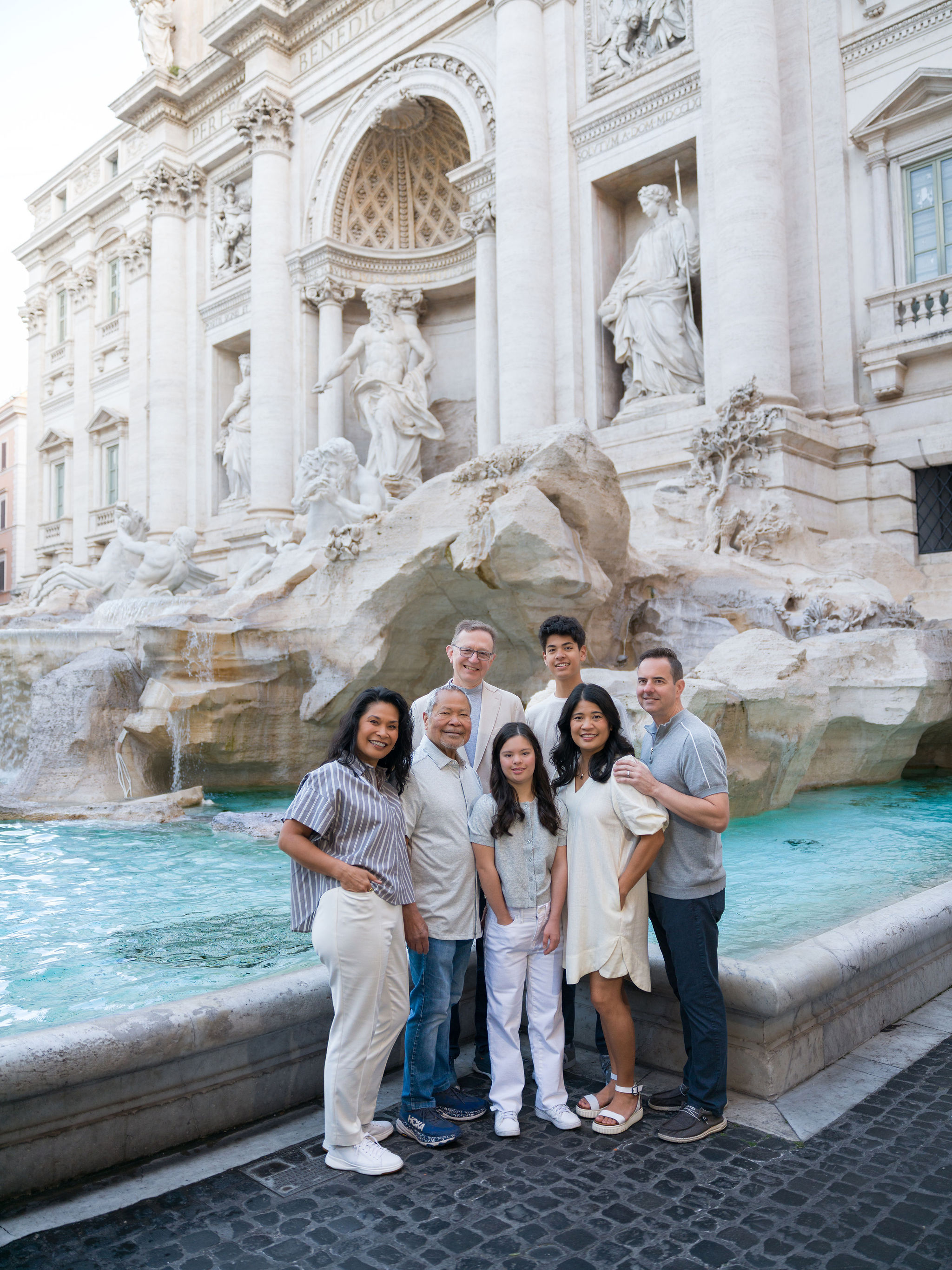
There is a particular kind of family I recognize the moment I meet them near the Pantheon or outside the Trevi Fountain.
It is not the couple on their honeymoon. It is not the group of college friends. It is the family standing a little too close together, checking on three generations at once, quietly trying to hold an entire trip together on their own shoulders.
If that is you, I want to say something plainly, before we go any further.
Rome is not difficult because of Rome. Rome is difficult because you are not planning one trip. You are planning three trips that happen to share a hotel room.
And almost nobody prepares you for that.
Most travel guides are written for a single kind of visitor. Someone with energy to spare, no naps to plan around, and no worry about how many stairs are ahead. That advice is not wrong. It is simply not written for you.
So this is not that kind of guide. This is closer to a conversation, one photographer to one parent, about the trip you are actually taking, not the one the guidebooks imagine.
The Weight You're Carrying
If you are somewhere between thirty-five and fifty-five, there is a good chance you already know this feeling from everyday life, long before the trip even begins.
You are the one making sure your children are fed, entertained, and not overtired.
You are also the one quietly watching your parents, wondering if they are more tired than they are letting on, and whether today asked too much of them.
Somewhere in between, you are supposed to be on vacation too.
It is a lot to carry. And it is worth saying, gently, that noticing this weight does not mean you are failing at it. It means you are paying attention to the people you love. That is not a flaw in your planning. That is simply what it means to belong to this generation, right now, in this particular season of life.
There is a phrase for this. The sandwich generation. Adults caught between raising their own children and caring for their aging parents, often at the very same time, often on the very same afternoon.
It is not a complaint. Most people who carry this role would not trade it. But it does mean the way you travel has to be different from the way you traveled before, and different from the advice written for people without this particular weight on their shoulders.
Once you accept that, planning gets easier. Not because the challenge disappears, but because you stop measuring your trip against the wrong kind of trip.
How Much Should You Actually Plan?
This is usually the first question, and it is a fair one. Is one attraction a day enough? Is two too many? Should the afternoons be free, or does unstructured time only invite restlessness?
There is no single right answer here. But after years of watching families move through this city, I can tell you what tends to work.
One meaningful destination each day. Something the day is built around, rather than something squeezed between two other things.
Everything else left loose.
The families who come home saying the trip felt relaxed, even joyful, are rarely the ones who saw the most. They are the ones who saw enough, and left themselves room to actually experience it.
Consider building in a slow morning every two or three days. Not a planned activity. Just coffee, breakfast at your own pace, and no schedule until midday. It sounds small. In practice, it is often the difference between a trip that feels like a checklist and a trip that feels like a memory.
And leave the last day light, if you can. Nothing exhausts a family faster than trying to fit one more museum in before a flight. Let the final day be soft. A last walk. A final gelato. Nothing you have to rush toward.
Trying to Make Everyone Happy at Once
Here is something I have learned, quite honestly, from standing behind a camera and watching family dynamics unfold in real time.
Trying to keep every single person content at every single moment is not a realistic goal. Someone will be a little tired. Someone will be a little bored. That is simply what happens when three generations share a city for a week.
What I notice, instead, in the families who navigate this well, is something quieter. An unspoken agreement that it is perfectly fine to split up sometimes.
Grandfather does not need to join the underground crypt tour. The teenager does not need to sit through a fourth church of the day.
Two hours apart, followed by dinner together, is not a failure of togetherness. Often, it is exactly what makes the time spent together afterward feel easier, warmer, and more genuine.
A simple way to plan for this in advance: pick one or two moments in the itinerary, ahead of time, that are naturally optional. A museum wing. A longer walk to a viewpoint. Frame it as a choice from the very beginning, rather than a decision made in frustration halfway through the day. It removes the guilt from splitting up, because it was part of the plan all along, not a sign that something went wrong.
A Word About Disagreements
They will happen. Even in the closest families.
Someone will want to linger at a market. Someone else will want to move on. A grandparent will insist they are fine to keep walking when they clearly are not.
These moments are not signs of a failed trip. They are simply what happens when people who love each other are tired, hot, and navigating an unfamiliar city together.
What helps, more than any itinerary, is deciding in advance who has the final say on pacing. Not to create hierarchy, but to remove the burden of negotiation from the middle of a busy afternoon. If everyone agrees beforehand that you, or perhaps another family member, will make the call when opinions differ, it becomes far easier to move forward without anyone feeling overruled.
The Question Underneath Everything: How Much Can They Really Walk?
This is, quite often, the real source of tension. And it is rarely spoken aloud.
Rome is a walking city, and most guides describe it as though wandering the cobblestones is effortless for everyone. It is not. Not for a grandparent managing knee pain. Not for a young child who tires faster than expected.
So I would encourage something simple, even if it feels slightly uncomfortable to ask directly: figure out, before the trip begins, what a realistic walking day looks like for the least mobile person in your family, not the most energetic one.
Build the day around that number.
It is a small shift in thinking. But it changes the entire emotional tone of the trip, including for the person who was quietly worried, the whole time, about being the one who slows everyone down.
A few practical things help here, more than they might seem to. Comfortable shoes, broken in well before the trip, not new ones bought the week before. Frequent, unhurried breaks, treated as part of the plan rather than an interruption to it. And when it makes sense, a taxi or short ride between two farther points, rather than a long walk simply because it seemed doable on a map.
None of this makes the trip smaller. It makes the trip possible, for everyone, at the same time.
This is often where families realize a written guide, however thoughtful, can only take them so far, because every family's mix of ages, energy, and mobility is genuinely different. That is part of why I put together a short, no-obligation guide on my site to help you think through which kind of photography experience actually fits your family's rhythm, rather than offering a single package meant for everyone. It is there to help you decide, not to sell you anything.
The Person Who Is Never in the Photographs
If you are the one reading this, the one holding the itinerary, there is a strong chance you are also the one who is rarely in the family photos.
You are behind the phone camera. You are the one saying, one more, everyone look here.
I hear this, almost word for word, from mothers and grandmothers I have photographed over the years. They did not realize how much it mattered until they looked back at old albums and noticed they were missing from their own family's story.
It is worth saying clearly: you are allowed to be in the photographs too.
If this is you, consider asking a family member, even just once during the trip, to take the phone from your hands for ten minutes. Not for a perfect photo. Just so that, one day, your children can look back and see that you were there too, not only the one who made sure everyone else was.
Choosing the Right Moment for a Family Photo
Not the right hour of the day. The right point in the trip.
Early on, everyone is well rested, but has not quite settled into the rhythm of being together yet.
Later on, everyone is more relaxed with each other, but also more tired, more sunburned, and often more interested in dinner than in posing.
In my experience, somewhere in the middle tends to work best. Enough days in that the initial awkwardness has faded and the family feels genuinely at ease together, but not so late that everyone is simply running on fumes.
And keep it brief. Twenty minutes, perhaps thirty. Long enough to capture something real. Short enough that nobody dreads it.
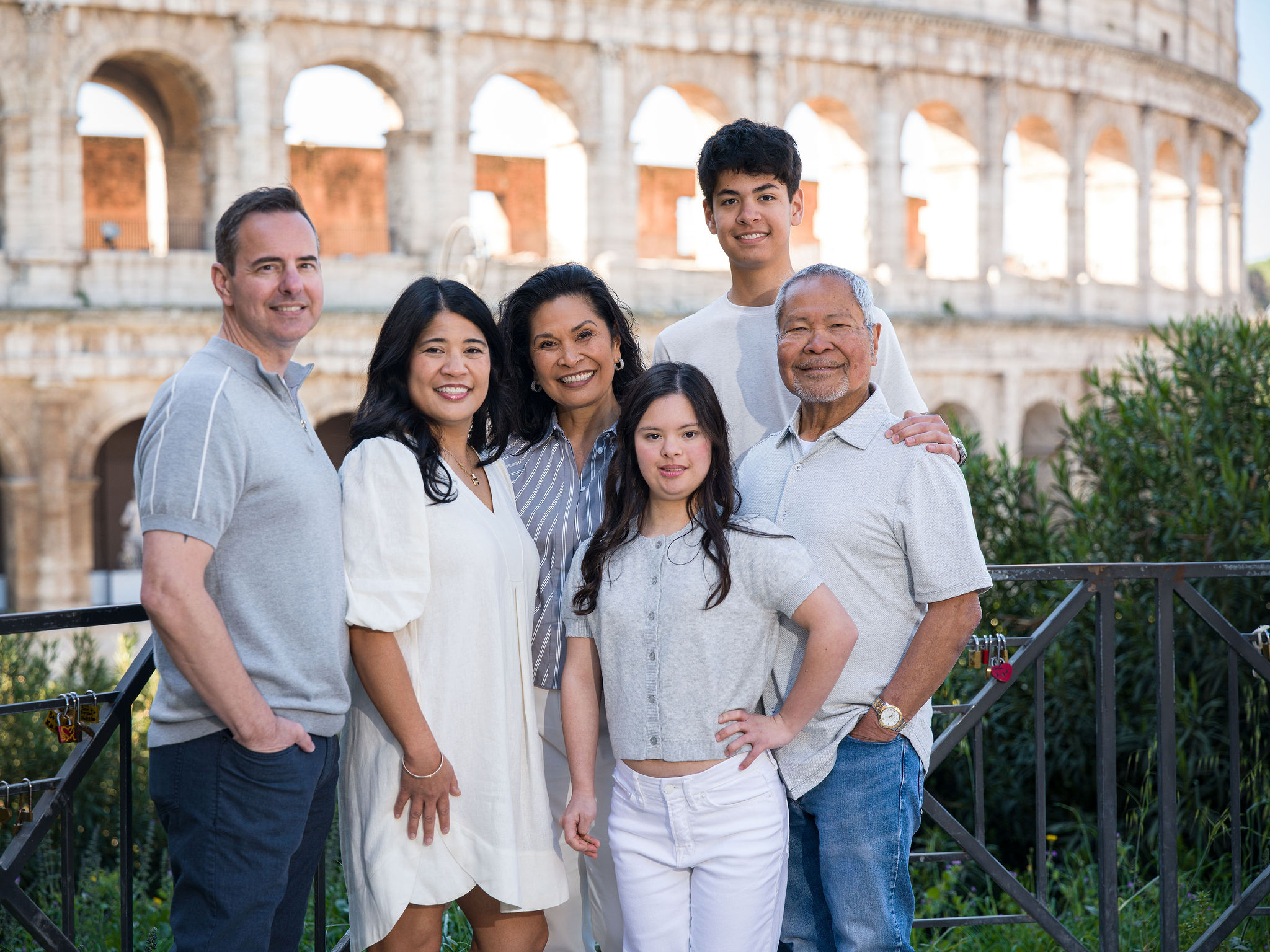
It is also worth choosing a location that asks little of your family physically. A quiet corner of a piazza. A shaded street near your hotel. The most memorable family photographs rarely come from the most famous backdrop. They come from the moment everyone was actually comfortable enough to be themselves.
The Guilt Grandparents Rarely Say Out Loud
There is a sentence I hear often, almost always said lightly, with a small laugh that does not quite reach the eyes.
Do not wait for me. I will only slow everyone down.
If someone in your family says something like this, they usually mean it sincerely, and it almost always comes from love. They do not want to be the reason the day becomes smaller for everyone else.
But it is worth saying back to them, kindly and clearly, that their pace is not a burden on the trip.
Their pace is the trip.
Ten years from now, no one remembers how many sites were visited in a single afternoon. What people remember is whether Grandmother was there, unhurried, present, rather than rushed through the day apologizing the entire way.
If you sense this guilt in a parent or grandparent before the trip even begins, it can help to say it out loud yourself. Something as simple as, we are not in a hurry, and we planned this trip around all of us, together, at whatever pace that takes. Said early, and said sincerely, it tends to ease far more than any itinerary adjustment could.
Giving Teenagers a Reason to Care
If there is a teenager in your family, the most effective tool you have is not a better itinerary. It is a small amount of genuine choice.
Let them choose where to eat one evening. Give them an hour on their own near the hotel. Allow them to skip one activity without needing to justify it.
Teenagers who feel like passengers on someone else's trip tend to disengage. Teenagers who are given even a little ownership over the experience tend to show up differently. More present. More willing. Sometimes, unexpectedly, more grateful than they let on at the time.
The same idea, gently adapted, works for younger children too. A choice between two gelato flavors. A say in which piazza to visit first. Small decisions, freely given, tend to reduce the bigger battles later in the day.
Before You Even Leave Home
A short conversation, before the trip begins, tends to prevent more difficulty than any packing list.
Sit down, even briefly, with the adults in the family. Talk honestly about pace, about energy levels, about what everyone actually hopes to get out of the trip. Not the itinerary. The feeling underneath it.
Ask your parents directly what they are looking forward to, and what worries them. Ask your children, or your teenager, the same. You may be surprised by the answers. Often, what people want most has very little to do with the landmarks at all.
This single conversation, had honestly and without rushing through it, tends to prevent far more tension than any perfectly optimized schedule ever could.
What You Will Actually Carry Home
After years of watching families move through this city, I have come to believe something quite firmly.
Almost no one comes home from Rome talking about how many landmarks they managed to see.
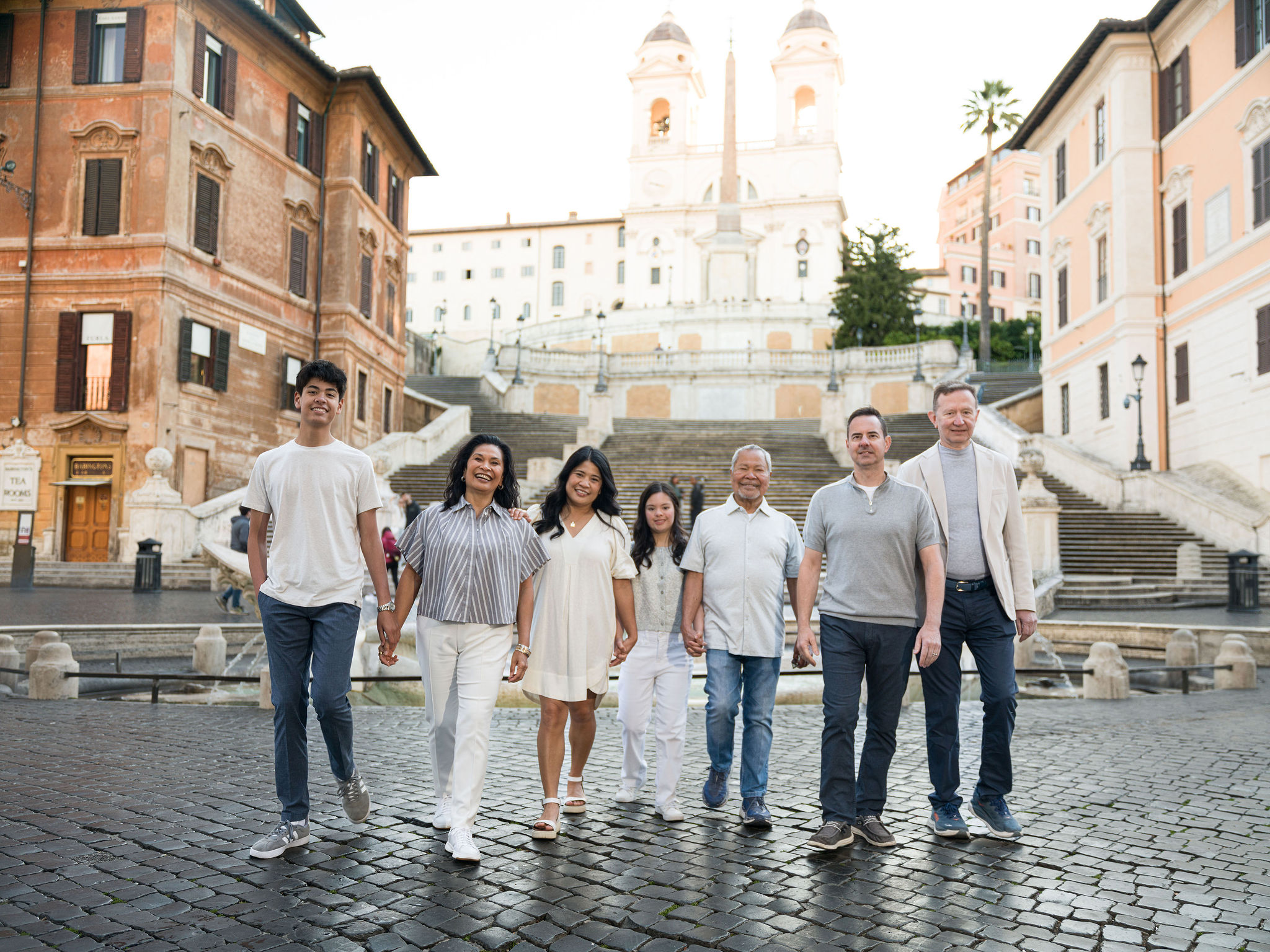
They talk about the gelato that made Grandfather laugh. The moment the children ran ahead into a piazza and everyone simply stopped to watch them. The unplanned twenty minutes spent sitting on the Spanish Steps because someone needed a rest, and it quietly became the best part of the day.
The success of a trip like this was never going to be measured by the itinerary.
It is measured by how your family remembers being together. And whether you, the one who carried the planning, the worrying, and the logistics, were able to actually be present inside that memory, rather than simply standing behind it.
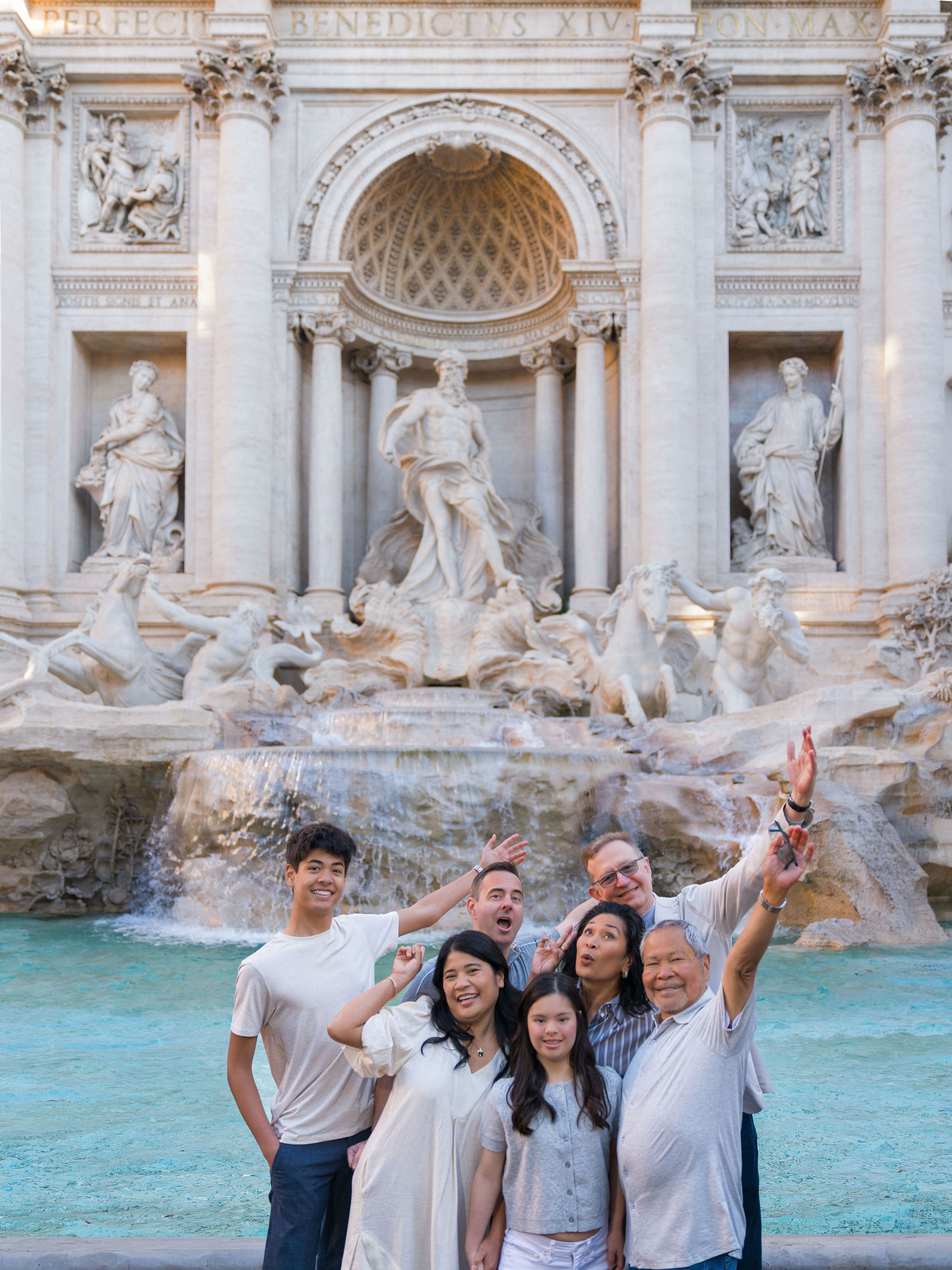
If you are still working out what kind of photography experience makes sense for a multi-generational trip like this, whether that is a relaxed family session, something designed around limited mobility, or simply an hour to gather everyone together without turning the day into a production, I have put together a short guide on my site to help you find the right fit for your family before you book anything. It is meant to help you choose. Not to sell you a package.
Jeff


%401x.svg)
%402x%20(5).svg)
