
%402x%20(5).svg)
Cart
(
)
Blue Hour, Golden Hour, Sunrise & Sunset, Explained Simply
If you've started researching a Rome photoshoot, you've probably run into a wall of unfamiliar terms. Blue hour. Golden hour. Sunrise. Sunset. They sound similar, but they produce genuinely different photographs, and this guide exists to clear up the difference in plain language, without a lecture on light physics or camera settings.
Early morning suits quiet, crowd-free landmarks. Golden hour gives warm, natural, romantic light. Blue hour creates a cinematic look, where a cool blue sky meets the warm glow of a lit-up building. Sunset suits gardens, terraces, and skyline views.
The right choice depends on your location and the season of your visit, which the rest of this guide will help you figure out.
These aren't separate, isolated moments. They're stages in one continuous process.
In the morning, the sky moves through several stages before daylight fully arrives: night, then astronomical twilight, then nautical twilight, then civil twilight, then the moment of sunrise itself, then golden hour, and finally full daylight. Blue hour sits at the tail end of that sequence, around the boundary between nautical and civil twilight, rather than as a separate stage of its own.
In the evening, the same sequence runs in reverse: daylight fades into golden hour, then the sun sets, then civil twilight begins (this is where blue hour lives), then nautical twilight, then astronomical twilight, and eventually full night.
One detail worth understanding clearly: sunrise and sunset are single moments, lasting only a minute or two. Blue hour and golden hour, on the other hand, are windows of time, sometimes brief, sometimes more generous, depending on the season.
For anyone who wants exact figures for a specific date, tools like PhotoPills are the standard reference most photographers rely on.
This is worth explaining on its own, since it's the effect people notice most, even without knowing why it happens.
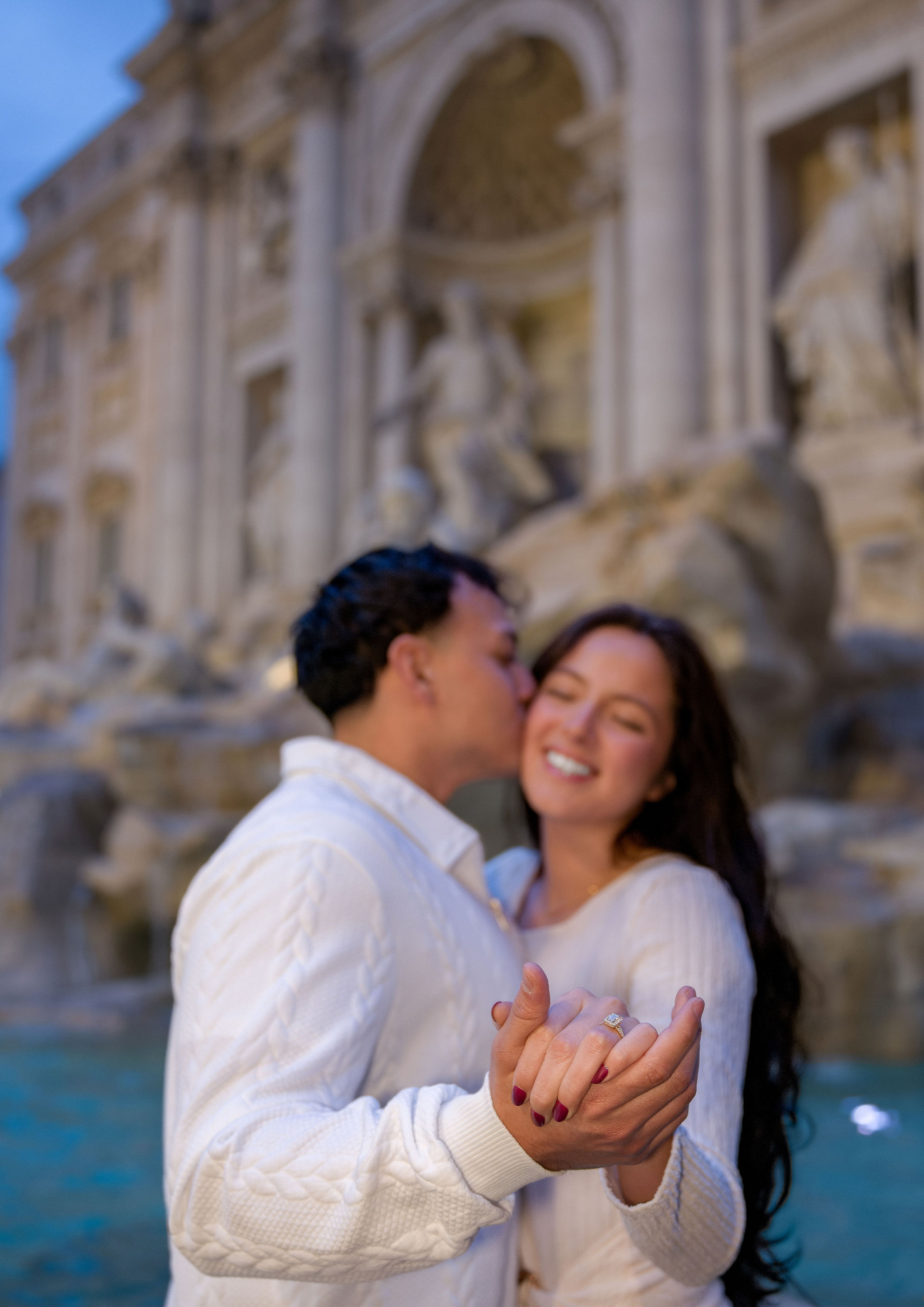
The sky still holds a deep, saturated blue, since the sun has only just dipped below the horizon. At the same time, many of Rome's landmarks, fountains, facades, bridges, have their architectural lighting switched on for the evening. For a short window, warm artificial light glows against a cool blue sky, together, in the same frame.
That contrast is what gives blue hour photographs their cinematic, almost movie-poster quality. It isn't a lens or an edit. It's two different color temperatures in one frame, something daylight alone can't produce. The tradeoff is that the window is brief: once the sky goes fully dark, or daylight fully returns, the contrast disappears, which is why blue hour sessions run on a tighter schedule than golden hour ones.
If you'd like to see what this contrast actually looks like at a specific Rome landmark, our Trevi Fountain Blue Hour Guide and Colosseum Blue Hour Guide both walk through it in detail, including real examples from past sessions.
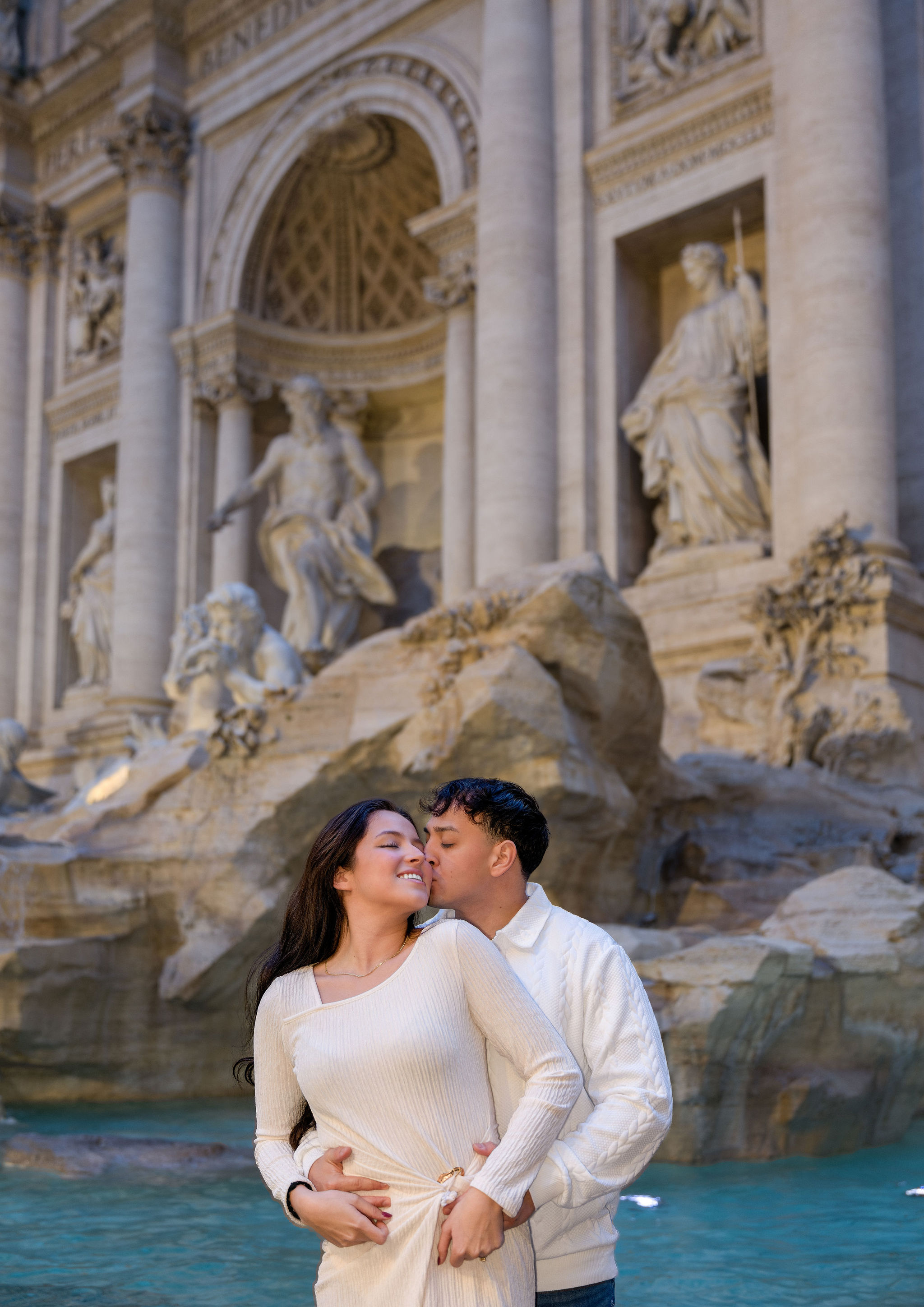
There isn't a universal winner here, honestly, and any guide that claims otherwise is oversimplifying things. But there are real, practical differences worth weighing.
Sunrise sessions mean smaller crowds and cooler temperatures in summer, at the cost of an early wake-up and hair/makeup call. Sunset sessions feel livelier and fit more easily into a day already in progress, at the cost of more foot traffic.
For families with young children or older relatives, a calmer morning session is often, though not always, the more comfortable choice. It depends more on your family's rhythm than any general rule.
A session can also blend both: a morning shoot might start in blue hour and drift into golden hour; an evening shoot might start in golden hour and close in blue hour.
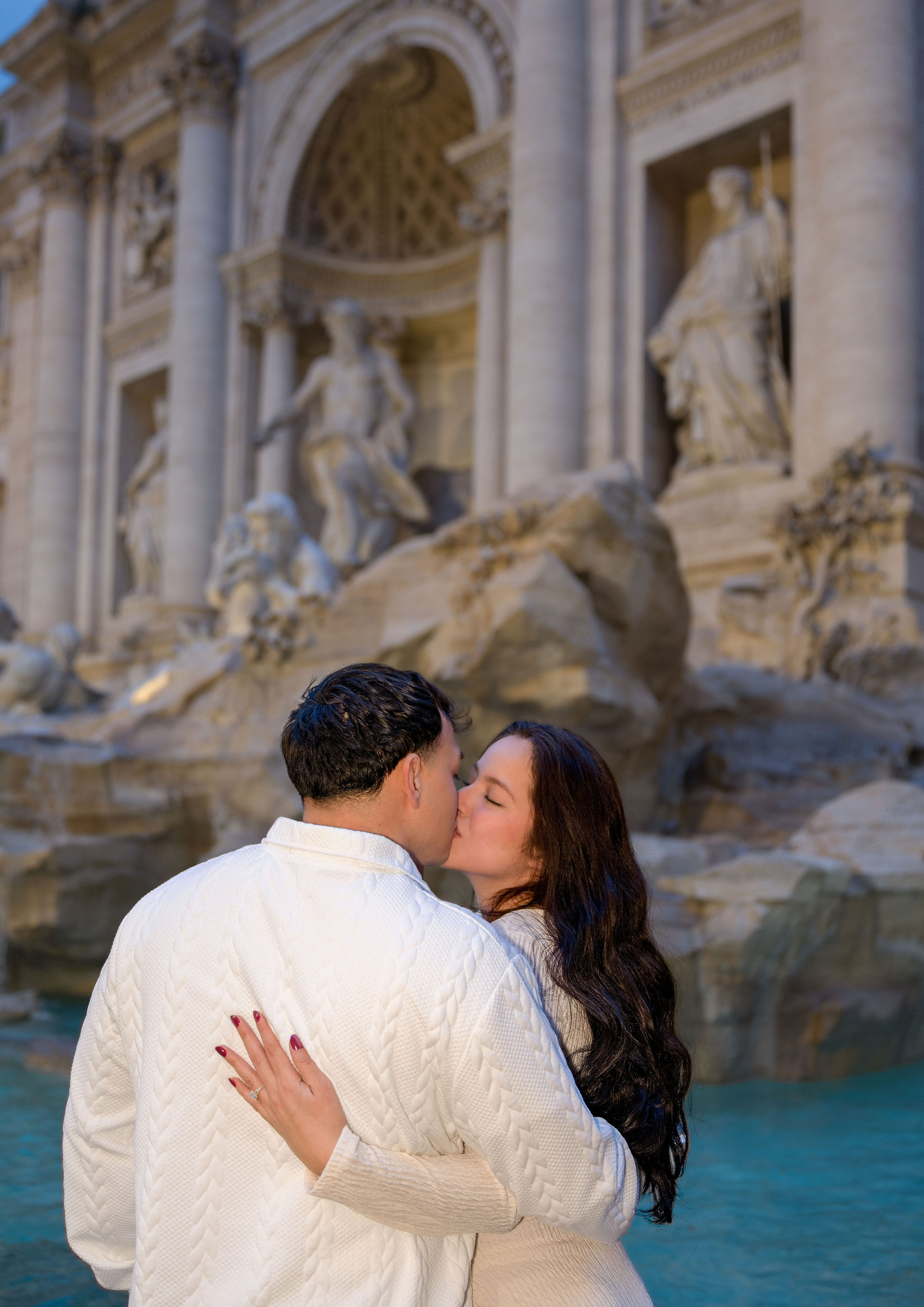
Sunrise and sunset times in Rome shift gradually across the seasons, sometimes more than visitors expect.
In summer, sunrise arrives quite early and sunset stretches out much later into the evening. In winter, the pattern reverses. Sunrise comes later, and sunset arrives noticeably earlier in the afternoon. Spring and autumn sit in between, but they're not static either. Because of daylight saving time, sunrise and sunset can shift by a genuinely large margin within just a few weeks during those transitional months.
Italy observes daylight saving time, moving clocks forward an hour on the last Sunday of March, and back again on the last Sunday of October. Between the seasonal drift and that one-hour jump, there's no single fixed hour that works for an entire season, let alone the whole year, for any given light type.
Rather than rely on a rough seasonal table, which can be misleading given how much timing shifts even within a single month, we built a Rome Photoshoot Light Planner that calculates sunrise, sunset, blue hour, and golden hour for any specific date you choose. It's the fastest way to see exact numbers for your actual travel dates, rather than a general approximation.
Whichever way you check it, the exact meeting time for any session is always confirmed based on the specific date being booked, not a generic seasonal rule.
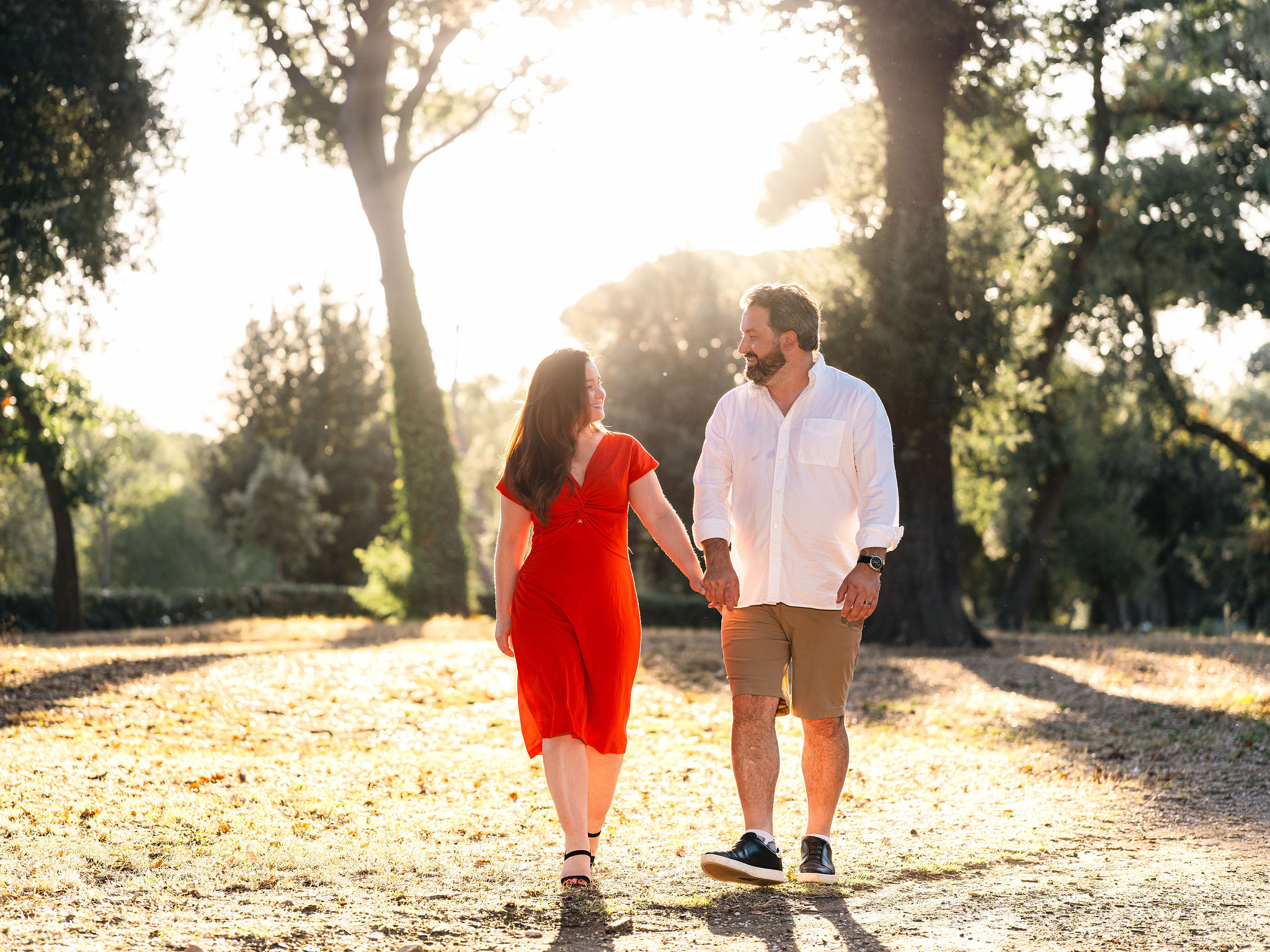
Different landmarks favor different light, largely due to orientation and foot traffic.
Trevi Fountain and the Spanish Steps both favor early morning, including pre-sunrise blue hour, to avoid the crowds that build once the sun is fully up. Evening blue hour is a different story here, since both spots stay busy well after sunset, so it's the morning version that delivers the quiet, crowd-free shot.
The Pantheon and Piazza Navona are similarly best experienced early, before the surrounding cafes and piazzas fill in.
The Colosseum works well in morning golden hour or roughly an hour before sunset, both covered in more depth in our dedicated guides.
Capitoline Hill suits either sunrise or sunset, depending on which direction you'd rather have the light coming from. Villa Borghese and the Pincio Terrace lean toward evening golden hour and sunset, thanks to their wide, open views.
Castel Sant'Angelo is well suited to blue hour or early morning, for reasons similar to the Trevi Fountain. And Trastevere works either way: mornings for quiet streets, evenings for a livelier atmosphere.
For a deeper look, including full walking routes and timing breakdowns, our location-specific guides cover each one individually.
This includes a dedicated sunrise route from the Trevi Fountain to the Colosseum, our full Rome Sunset Photoshoot Guide, and a dedicated Colosseum Sunset Guide for a closer look at that specific route.
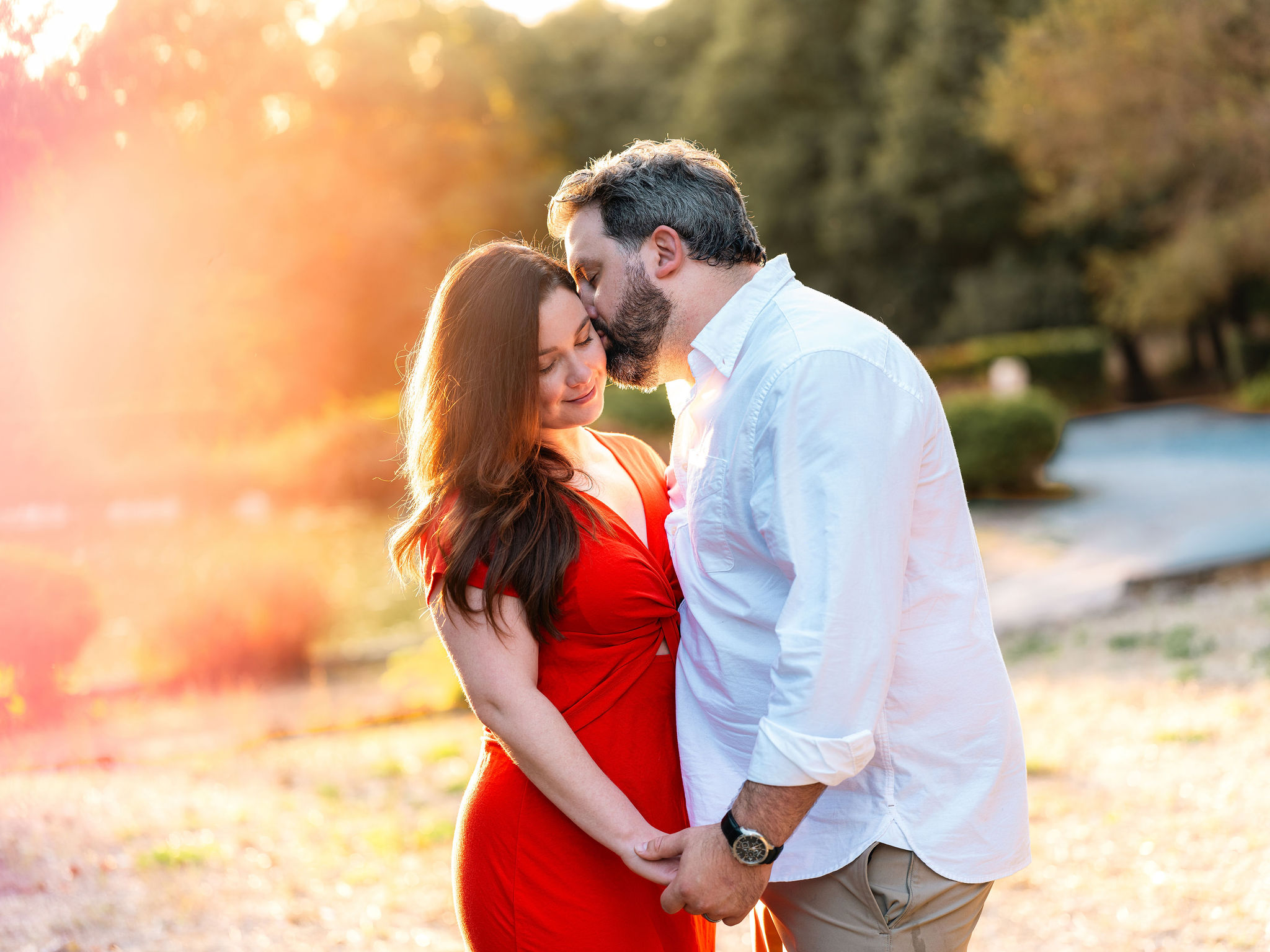
Timing alone doesn't tell the whole story.
Sun direction shifts between summer and winter, so a location shot in June won't get light from quite the same angle in December. Nearby buildings and the skyline can also block direct light earlier or later than expected.
Clouds soften harsh light in a flattering way, but can mute the vivid color golden hour or blue hour is known for. A richly colored sunset, or brightly lit buildings during blue hour, is never fully guaranteed. The ideal time is best confirmed close to the actual date, once season, forecast, and location are all known together.
A fast way to match your priority to a light type, at a glance:
● Quiet, crowd-free landmark → sunrise or early morning
● Cinematic, blue-and-gold look → blue hour
● Warm, romantic, natural light → golden hour
● Gardens, terraces, skyline views → sunset
● Traveling with kids or older relatives → let their pace decide, not the clock
● Not sure where to start → pick your main location first, and let the time follow from that
Not quite. It varies by season, and it can run a little shorter or a little longer depending on the time of year.
Both. There's a blue hour window before sunrise and another one after sunset.
Neither, universally. See the comparison above; it comes down to crowds, your schedule, and your location.
Morning, ideally including the pre-sunrise blue hour window. See the location section above for why.
Often before 6 AM at the height of summer, since the sun rises noticeably earlier during those months.
Yes. Cloud cover can soften the light beautifully while also muting the color these hours are known for.
Once your travel date and location are set, using the exact sunrise or sunset time for that day, not a seasonal average.
Still not sure which light suits your plans best? Send over your travel dates and the locations you're hoping to photograph, and you'll get a personalized time recommendation, built around the season, the location, and what you're actually picturing for the session.


"text": "Once your travel date and location are set, using the exact sunrise or sunset time for that day, not a seasonal average."
}
}
]
},
{
"@type": "BreadcrumbList",
"itemListElement": [
{
"@type": "ListItem",
"position": 1,
"name": "Home",
"item": "https://www.eidosphotography.com/"
},
{
"@type": "ListItem",
"position": 2,
"name": "Blog",
"item": "https://www.eidosphotography.com/blog"
},
{
"@type": "ListItem",
"position": 3,
"name": "The Complete Rome Photoshoot Timing Guide: Blue Hour vs Golden Hour",
"item": "https://www.eidosphotography.com/blog/rome-photoshoot-timing-guide"
}
]
}
]
}
</script>
%402x.svg)
%401x.svg)
%402x%20(5).svg)
