

Outfit Ideas by Season, Location & Occasion
Dressing for a professional photoshoot in Rome is a different task from dressing for sightseeing. A session here has to account for camera optics, background texture, light direction, and hours of walking on ancient stone, not just personal style.
This guide skips the generic "Italian elegance" advice and focuses on what actually affects your photos: color against Rome's specific backdrops, fabric behavior in motion, and the practical logistics of shooting in a historic city. The goal is simple: choose a wardrobe that keeps you comfortable, complements the architecture, and keeps you the visual center of every frame rather than competing with the background.
Colour works in relation to the background and the light. A shade you love in person may look softer or less distinct against pale stone in a photograph. That is why the location-by-location guidance below focuses on the outfit and backdrop together.
Contrast vs. Harmony: The Core Styling Choice
Every wardrobe decision against Rome's backdrop falls somewhere between two approaches.
- Contrast: colors that visibly separate you from the background, so the eye locks onto you immediately.
- Harmony: monochromatic, neutral, or pastel tones that blend with the architecture for a soft, painterly result. Neither is wrong, and no color is banned outright. A white dress in front of white marble reads very differently than a deep ruby dress in the same spot, and knowing that difference in advance, rather than discovering it in the final gallery, is what this guide is for. Most clients end up blending both approaches within a single session: a contrast color for the main portrait, a softer harmony tone for a quieter, more candid moment.

Four Rules That Apply Everywhere
Before getting into specific locations or seasons, these four rules hold true no matter where in Rome you're shooting or what the occasion is.
1. Fabric Movement
Flowing fabrics, chiffon, silk, fine linen, organza, react to Rome's wind and open plazas and add real dimension to photos, catching motion in a way a still frame can't otherwise capture. Stiff, structured synthetics tend to look flat and static on camera, and they also restrict the kind of natural posing and movement that makes a session feel alive rather than staged.
2. Avoid Micro-Patterns
Tight stripes, houndstooth, or small grid checks can trigger moiré, a wavy, rainbow-tinted digital distortion, on high-resolution sensors, especially at a distance. It's a technical quirk of digital photography rather than anything to do with the outfit itself, but it's genuinely distracting once it appears. Solid colours, bold colour-blocking or larger-scale prints can reduce that risk.
3. Texture Over Logos
Large logos and graphics pull attention from your face and expressions, and they tend to date the photos quickly once the trend fades. If you want visual interest without relying on bright color, texture does the job better: lace, knitwear, linen weave, silk sheen, or subtle embroidery all read beautifully on camera without pulling focus.
4. Prepare for Creases
Linen and thin rayon wrinkle fast in transit, sometimes within minutes of sitting in a taxi. Steam or iron the outfit the night before rather than the morning of, when there's rarely enough time to do it properly. If a garment wrinkles easily regardless, consider traveling to the location in something casual and changing into the real outfit right before shooting starts.
Best Colors by Location
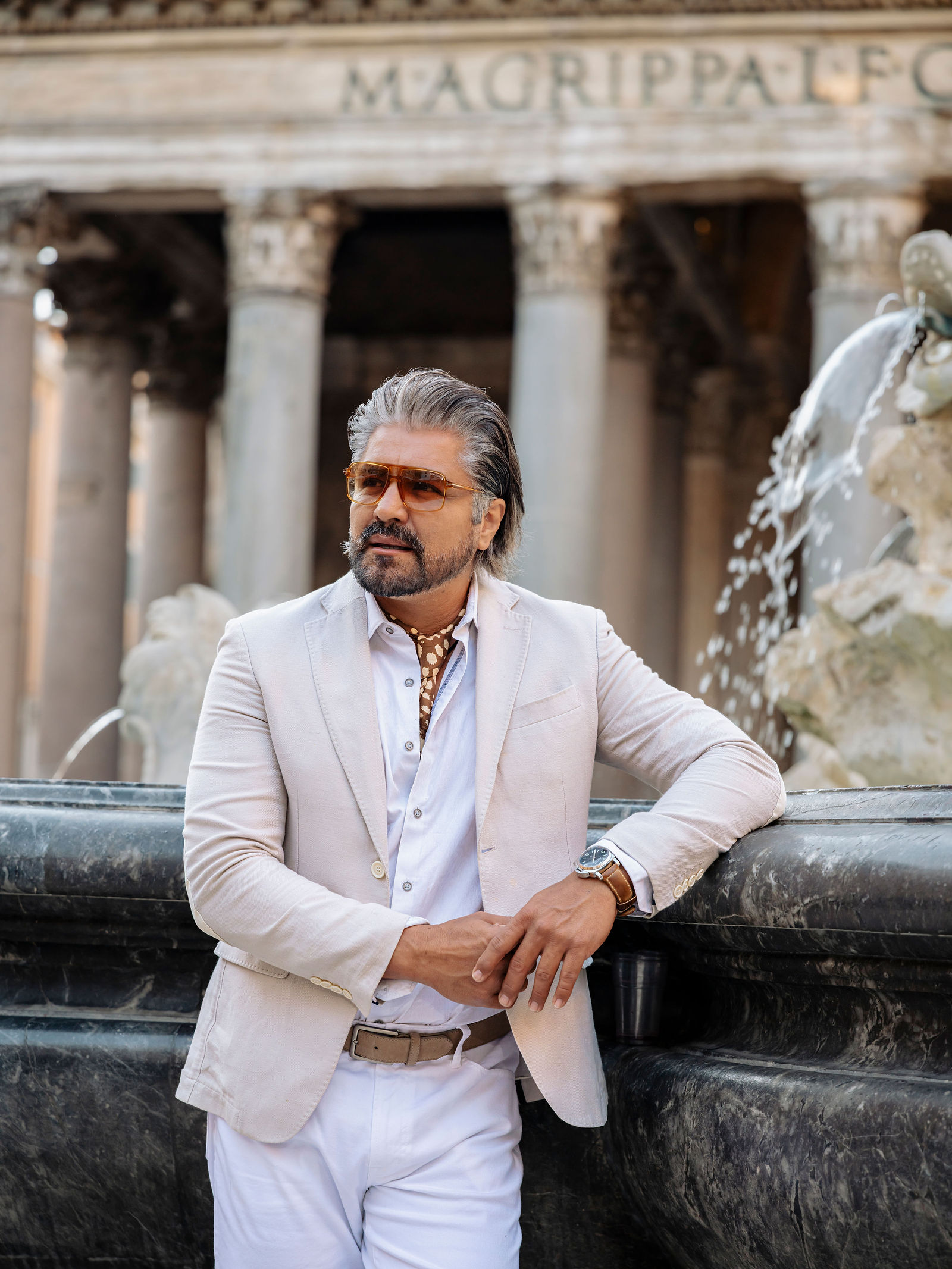
Rome's backdrops shift dramatically by neighborhood, so the same dress can read completely differently a ten-minute walk apart.
| Location | High-Contrast (Pop) | Soft / Harmony |
|---|---|---|
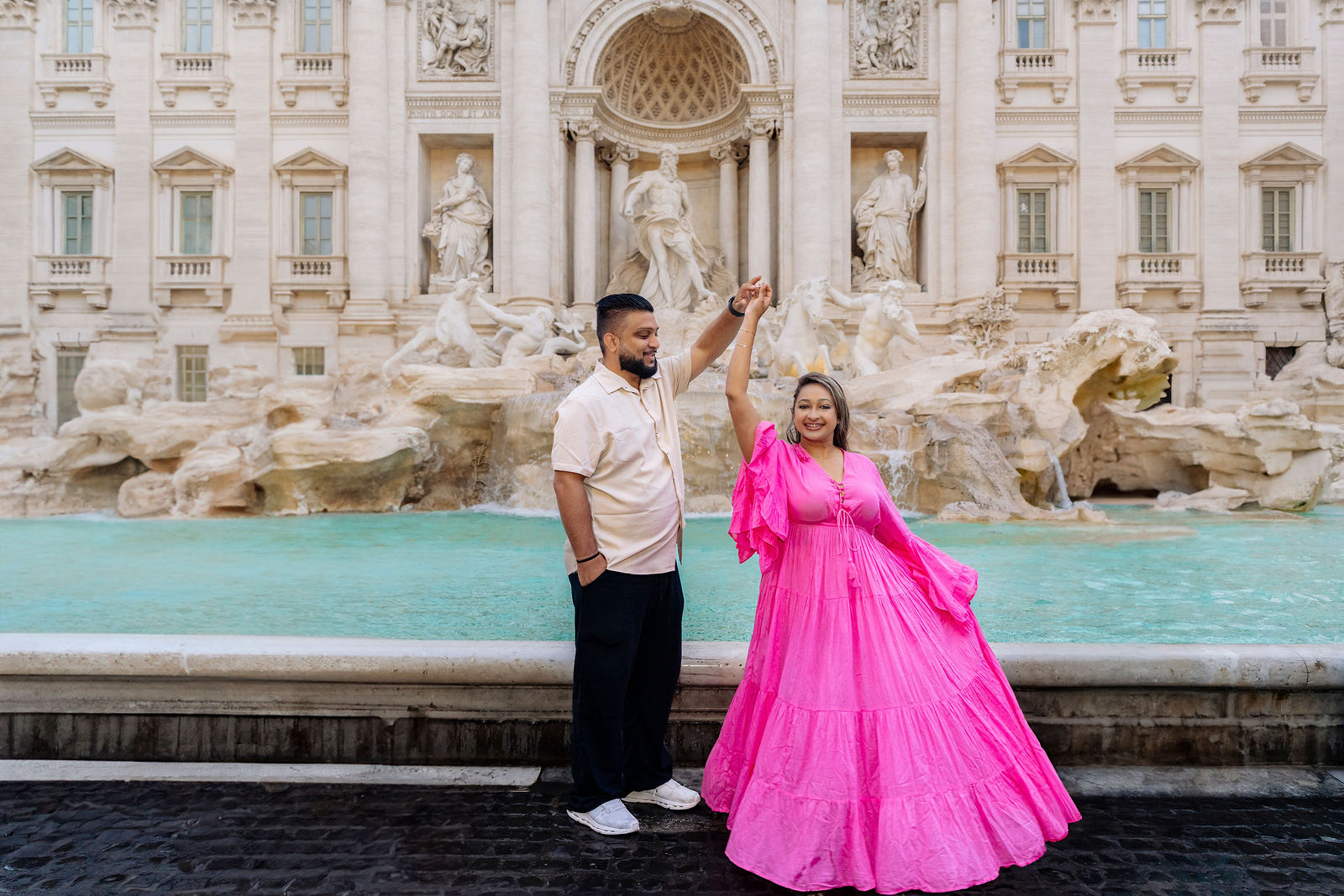
| Trevi Fountain | Burgundy, crimson, emerald, terracotta, navy | Blush, light gray, taupe, sage |
| Colosseum & Forum | Navy, forest green, crisp white, plum, crimson | Warm beige, camel, olive, ochre |
| Spanish Steps | Royal blue, emerald, black, yellow, magenta | Pastel pink, lavender, soft cream |
| Pantheon & Navona | Deep red, cobalt, classic black & white | Amber, caramel, charcoal, warm white |
| Monti & Trastevere | Terracotta, burnt orange, rust, mustard, navy | Cream, sage, light denim, soft florals |
| Vatican / St. Peter's | Royal blue, wine red, deep purple, dark suits | Charcoal, navy, tailored neutrals |
| Villa Borghese | Blush pink, coral, pale yellow, crisp white | White, light linen, cream |
| Blue Hour / Night | Crimson, emerald, metallic, cobalt | Black tuxedo, midnight navy |
A few notes the table doesn't fully capture: at St. Peter's Square, shoulders and knees need to be covered if you plan to step inside afterward, so plan the day's layering with that in mind. At Villa Borghese, avoid solid medium or bright green, since it blends you into the grass and pines rather than separating you from them, undercutting the exact softness you're usually going for in a garden setting. And at the Trevi Fountain specifically, an early sunrise session bathes the marble in cool, bright light, which makes jewel tones like emerald and burgundy pop with unusual intensity.

For an outdoor Vatican session followed by an interior visit, read our Vatican photography rules guide. For the difference between sunrise, golden hour and blue hour, see the Rome photoshoot timing guide.

Dressing by Season
| Season | Weather & Light | Fabrics & Layers |
|---|---|---|
| Spring (Mar-May) | Often mild; mornings can feel cool | Trench coats, blazers, cotton midis, silk layers |
| Summer (Jun-Aug) | Often hot, with strong daytime sun | Linen, chiffon, thin cotton, breathable weaves |
| Fall (Sep-Nov) | Variable; light and temperature change through the season | Knitwear, blazers, light wool, silk, scarves |
| Winter (Dec-Feb) | Often cool and damp; dress for the actual forecast | Wool coats, thermals, gloves, boots, scarves |
- Spring: layer a lightweight dress under a trench coat or leather jacket you can remove once the sun is fully up; soft rose, sage, and cornflower blue suit the clear morning light.
- Summer: prioritize breathable natural fibers and loose silhouettes; crisp white, coral, and sky blue hold up well against the intense midday sun.
- Fall: richer textures work best, silk or chiffon paired with a structured blazer or wool coat; burnt orange, burgundy, and camel echo the season's warm light.
- Winter: build the outfit around a genuinely warm coat rather than layering thin pieces; deep jewel tones and classic neutrals both photograph well against grey winter skies. In winter especially, treat your coat as part of the outfit rather than something to shed for the photo. Taking off a heavy coat in 5°C air tends to leave you visibly tense in the very next shot, so a well-tailored coat in camel, deep red, navy, or forest green, worn with thermals underneath, works better than fighting the cold in a thin layer. In summer, the opposite risk applies: tight synthetic fabrics trap heat and show sweat patches on camera well before you'd notice them yourself, so loose, breathable natural fibers aren't just more comfortable, they photograph more cleanly too.

Dressing by Occasion
The right palette also depends on who's in front of the camera and what the day is actually for, not just where you're standing.
| Occasion | Wardrobe Goal | Key Consideration |
|---|---|---|
| Couple & Engagement | Complementary, not identical | Match formality levels between partners |
| Secret Proposal | Photo-ready without suspicion | Suggest an occasion such as a breakfast reservation |
| Family Photoshoot | 3-4 colour family palette | Prioritise children's mobility over exact matching |
| Solo / Branding | Versatile layers, simple changes | A jacket, hat or glasses swap gives a different look |
| Babymoon | Highlight the bump, stay comfortable | Empire waists, stretch lace, comfortable flat shoes |
| Wedding / Elopement | Formal bridal elegance | Plan for train weight and a cold-morning coat |
A recurring theme across all of these: coordinated beats identical. Couples and families photograph better in a shared palette of two to four complementary tones than in matching outfits, which tend to look artificial and date quickly. For a secret proposal specifically, the trick is suggesting an elegant outfit indirectly, through a nice breakfast reservation planned right after the walk, rather than asking outright and risking suspicion. For a wedding or elopement, plan for the gown's train picking up dust on cobblestones, and bring a coat for cold-morning waits between shots even if the ceremony itself is indoors.

Compare family photoshoot routes or couple and honeymoon sessions before choosing how many outfits to bring.
Indian Attire in Rome
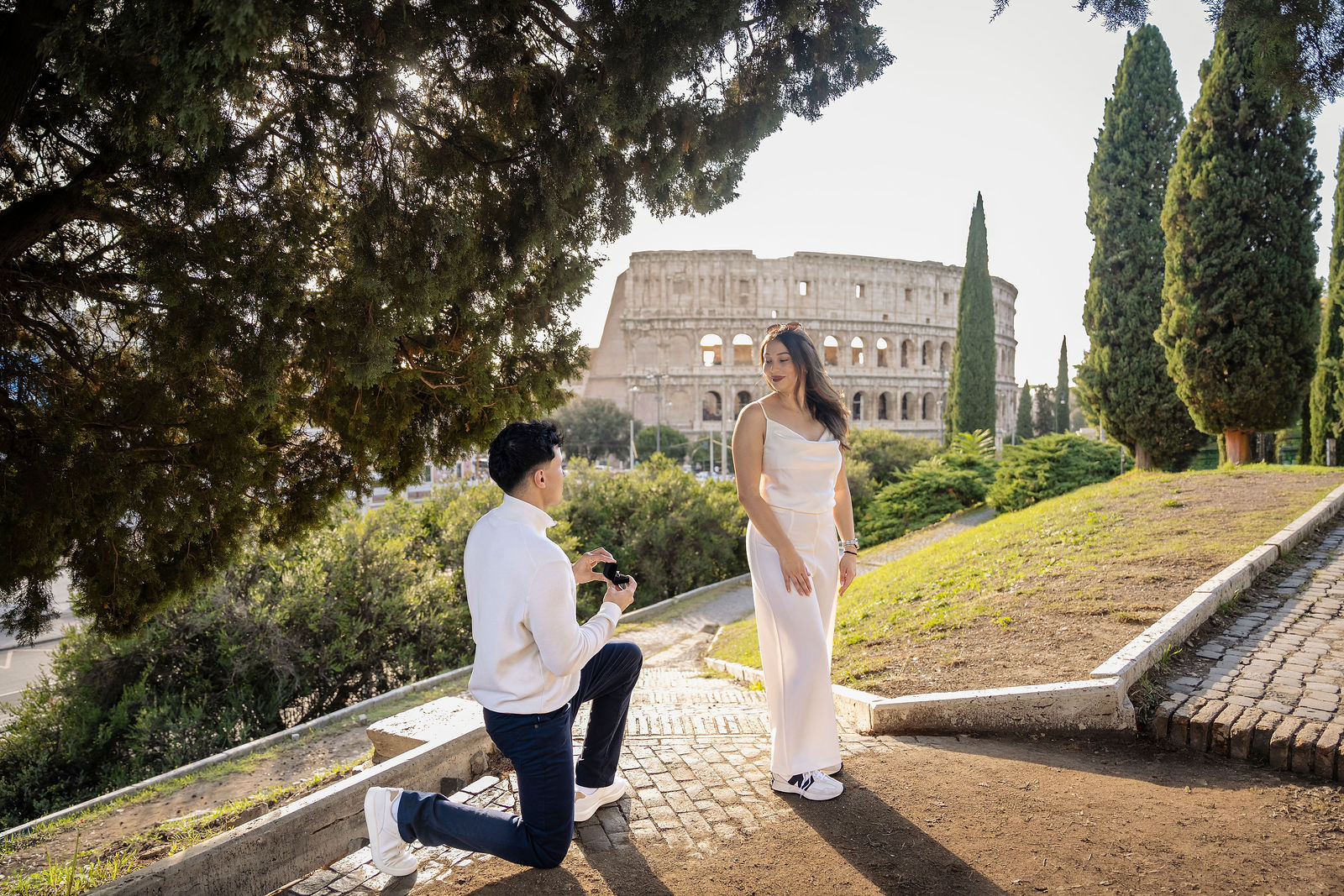
Sarees, lehengas, anarkalis, and sherwanis pair strikingly with Rome's pale stone; the drape and color read as genuinely regal against travertine and ancient brick. A few logistics matter more here than the color choice itself, since these garments weren't originally designed with cobblestone streets in mind.
| Garment | Fabric & Style | Rome Logistics |
|---|---|---|
| Saree | Chiffon, georgette, organza | Pre-drape pleats; secure the pallu for wind |
| Lehenga | Moderate flare, lighter layers | Choose manageable underskirt volume; lift carefully when walking |
| Anarkali | Flowing silhouettes | Check hem length for multi-stop walks |
| Sherwani / Kurta | Silk-cotton or raw silk | Match weight to season; secure dupattas comfortably |
- Pin pleats and the pallu securely; open plazas get windy, especially in the morning, and a pre-draped saree saves valuable prep time before an early shoot.
- A heavily layered lehenga can be tiring to carry; choosing a lighter, removable underskirt may be more comfortable on stone stairs like the Spanish Steps, and lifting the skirt from the waistband rather than the embroidered hem protects the border from scraping the paving.
- Traditional flat-soled shoes like juttis and mojris get slippery on polished cobblestones, especially on damp mornings; add grip pads, or switch into them only for the actual shot and wear supportive shoes in between.
- Classic reds and maroons suit the Trevi Fountain and Colosseum beautifully against pale stone; pastels and jewel tones suit Trastevere and Piazza Navona's warmer facades.
- For couples, one heavily embroidered outfit in a rich tone pairs well with a partner in a neutral base, ivory or cream, accented with a pocket square or dupatta that echoes the primary color.
Footwear and Rome's Cobblestones
Rome's Sanpietrini, small dark basalt cobblestones, are uneven and slippery underfoot, which makes shoe choice a practical issue as much as a style one. Choosing the wrong pair doesn't just risk comfort, it can risk a turned ankle on an uneven gap between stones.
| Shoe Type | On Camera | On Cobblestones |
|---|---|---|
| Thin stilettos | High-fashion look | Can catch in gaps between stones |
| Block heels / wedges | Elegant, elongating | Often easier than stilettos, but footing and grip still matter |
| Dress loafers | Sharp with tailoring | Choose a sole with grip and test comfort beforehand |
| Comfortable sneakers | Casual styling | Useful between stops; wear a broken-in pair |
The most reliable approach is the two-shoe strategy: wear comfortable, broken-in shoes between locations, and carry your formal photo shoes in a light bag, switching into them only for the shot itself and back again before moving on. If you'd rather wear heels the whole time, avoid thin stilettos entirely, since they catch in the gaps between stones and risk both the shoe and your ankle. Block heels and wedges hold up far better, spreading weight evenly across the uneven surface, and well-fitting flats can give an elongated leg line while being easier to walk in. No shoe removes the need to watch your footing.
Shoes are only one of the small things that make a difference on the day. We put the rest in 11 things nobody tells you before a Rome photoshoot.
Changing Outfits Mid-Session
Changing facilities can be limited near open monuments, so outfit changes need planning. A café or hotel changing space is available only with the venue’s permission; changing and travel time use the booked session.
| Session Length | Suggested Outfits | Changing Plan |
|---|---|---|
| 60 minutes | 1, plus a layer | A jacket or scarf swap usually uses less time |
| 90-120 minutes | Up to 2, if agreed | Plan an appropriate private changing place beforehand |
| Half-day / custom | 2-3, depending on the route | A pre-arranged hotel base or permitted private space |
A full change, including walking time, runs about 15 to 20 minutes, which is a significant bite out of a 60-minute sunrise slot when the light is at its best. For short sessions, one outfit plus a removable layer (jacket, blazer, scarf) gives you visual variety without losing shooting time. For longer sessions, a pre-arranged private changing stop can also provide a rest, and quick-wrap garments that fit over basic undergarments can save time versus a full outfit swap.
What Not to Wear
A short list of choices that consistently create problems on camera, on stone, or both, regardless of season or location.
| Avoid or Plan Carefully | Why |
|---|---|
| Ultra-thin stilettos | Can catch in stone gaps |
| Micro-stripes, tiny grid checks | May produce distracting moiré patterns |
| Large designer logos | Can pull focus from the face |
| All-green outfits in a garden | May merge with grass and pine trees |
| Tight, unbreathable fabrics in summer | Can feel uncomfortable and show sweat |
| Insufficiently warm layers in winter | Can lead to shivering and tense posture |
Photoshoot Day Checklist
A short list worth packing into one light tote bag the morning of the shoot, rather than assembled in a rush on the way out the door.
- Comfortable walking shoes, plus your formal photo shoes carried separately in the bag until needed
- Safety pins and a small sewing kit, for sarees, dupattas, loose straps, or a sudden hem issue
- Outfits pressed and hung the night before; use a steamer at your accommodation if the care label allows it
- A touch-up kit: powder, lip balm, oil-blotting papers, and hairpins for wind control
- Water and tissues, especially useful on warm mornings or after a bit of walking
- A light bag only, no bulky backpacks, large purses, or valuables that need watching
Frequently Asked Questions
Should I bring a garment steamer to Rome?
A travel steamer can help with suitcase creases if your garment’s care label allows steaming. Check delicate fabrics and test an inconspicuous area first. Press clothes at your accommodation the night before rather than carrying a steamer between photo stops.
What happens if it rains on the morning of our shoot?
Light rain may allow the session to continue with a suitable route adjustment. Bring a plain umbrella if useful. For standard direct bookings, severe weather that makes the session impossible to start or continue allows a reschedule or full refund under our booking terms. Your confirmed booking and any package-specific conditions apply.
How far in advance should I plan my outfits?
About two weeks ahead is a useful starting point for fittings, tailoring and coordinating colours with your partner or family, especially if you need alterations or a rental.
Can someone watch our bags during the shoot?
Keep belongings light and leave valuables and large suitcases at your accommodation. Do not assume a photographer or assistant can provide secure bag storage or continuous supervision; discuss any practical needs before booking.
What if the colour I want to wear is not in the location table?
Use the underlying contrast-versus-harmony idea rather than treating the table as a rule. Rich colours can stand out against pale stone, while soft neutrals can create a quieter result. The actual light, background and your comfort matter more than following a fixed palette.
Read the full booking and severe-weather terms before reserving.
Plan Your Rome Photoshoot
Share your dates, locations and vision, and we will help you build a wardrobe palette suited to your backdrop and season, along with a route that suits your pace. If you need a full outfit change, let us know before booking so we can check the time and an appropriate changing space.
Jeff


